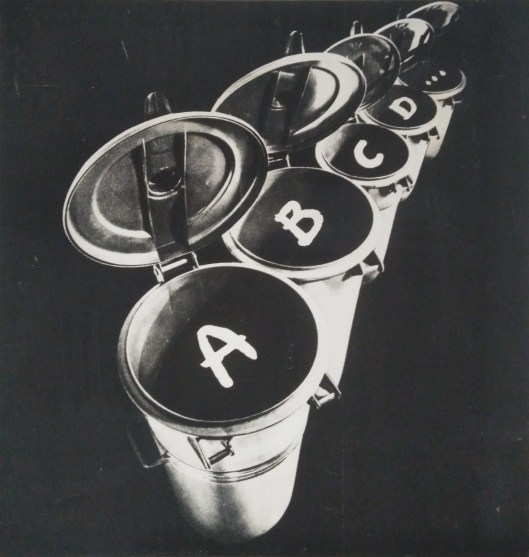
A, B, C, D, … (1973) | tela emulsionata | cm 123×118
© Riproduzione riservata | © All rights reserved | © Tous droits réservés | © Alle Rechte vorbehalten
15 sabato Lug 2023
Posted in Opere
A, B, C, D, … (1973) | tela emulsionata | cm 123×118
© Riproduzione riservata | © All rights reserved | © Tous droits réservés | © Alle Rechte vorbehalten
08 sabato Lug 2023
Posted in Archivio documenti, Scrittura
Tag
Antonio Porta, Arte Contemporanea, Contemporary Art, Lucia Marcucci, Luciano Ori, Poesia Visiva, Sampietro Editore, Scrittura, Stelio Maria Martini, Visual Poetry
IL DISSENSO Nr. 7 (1965) | Collana di letteratura | Sampietro Editore
POESIE VISIVE – Lucia Marcucci, Stelio Maria Martini, Luciano Ori, Antonio Porta.
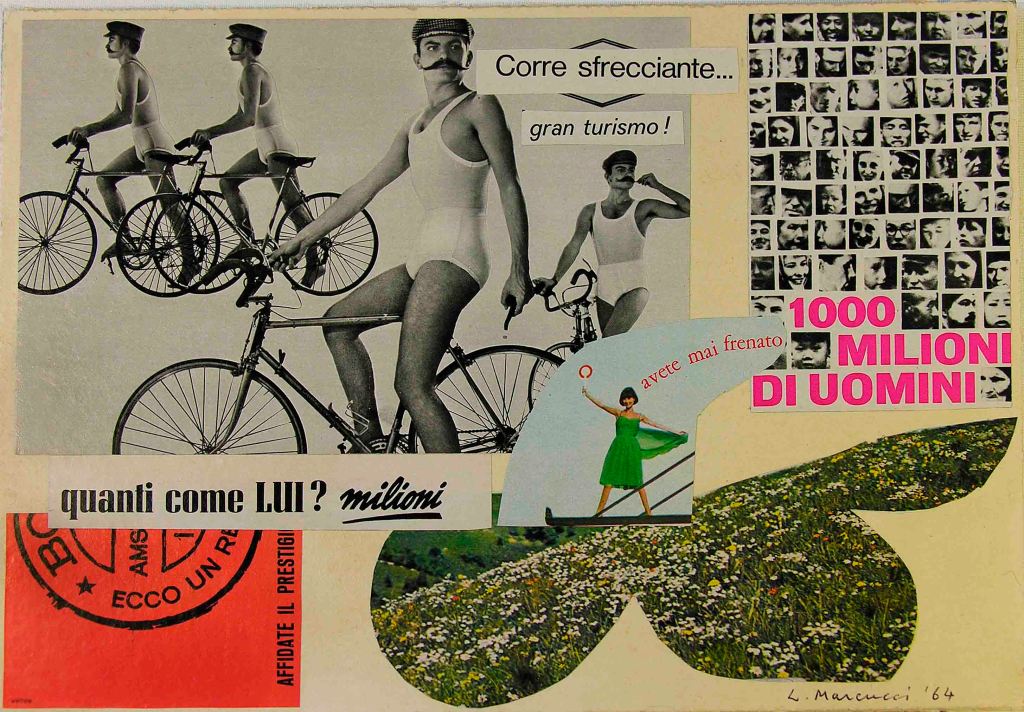
“Nell’attuale civiltà di massa, delle immagini, del rapido consumo, il messaggio poetico, che sia teso verso una diffusione più adeguata ai tempi, ha bisogno di acquistare una carica demistificatoria verso la tradizione e di servirsi di materiali tecnologici (quali slogans, notizie, linguaggio politico, citazioni, titoli di giornali, pubblicità, figurazioni consumate dai rotocalchi, ecc…) per protestarli, rovesciarne il segno, inserirli in un contesto estetico per ricavarne il più ampio spettro di fruizione. In particolare questo tipo di poesie visive è progettato per una immediata lettura. Contribuisce a ciò il grado di inaspettatezza del vettore, in quanto il consumatore viene a essere sollecitato anche da immagini figurali di diretto (o contrario) rapporto con il messaggio.” – Lucia Marcucci (1965)

© Riproduzione riservata | © All rights reserved | © Tous droits réservés | © Alle Rechte vorbehalten
01 sabato Lug 2023
Posted in Scrittura
Daimon, colui che divide e scinde, un laceratore, il dio Eros, l’Arte.
© Riproduzione riservata | © All rights reserved | © Tous droits réservés | © Alle Rechte vorbehalten
25 domenica Giu 2023
Posted in Eventi
Tag
Arrigo Lora Totino, Arte Contemporanea, Ben Vautier, Centro per l'Arte Contemporanea Luigi Pecci, Contemporary Art, Emilio Villa, Eugenio Miccini, Gianfranco Baruchello, Giovanni Fontana, Gruppo '70, Jiri Valoch, Ketty La Rocca, Klaus Groh, Lamberto Pignotti, Lucia Marcucci, Luciano Caruso, Luciano Ori, Luigi Tola, Magdalo Mussio, Mario Diacono, Maurizio Nannucci, Michele Perfetti, Poesia Visiva, Ray Johnson, Rodolfo Vitone, Ugo Carrega, Vincenzo Accame, Visual Poetry, William Xerra
Il Centro Pecci presenta Raccolte in vista, un ampio progetto espositivo di valorizzazione dell’archivio che si concentra su libri d’artista, edizioni, manifesti e altri tipi di documenti d’arte contemporanea acquisiti nel corso di decenni attraverso il Centro di Informazione e Documentazione CID/Arti Visive e, in parte, anche nelle collezioni museali.
Suddivisi in 4 sezioni tematiche distinte e una monografica – che fanno eco rispettivamente all’allestimento della collezione Eccentrica. Le collezioni del Centro Pecci e agli ANIMANI di Mario Mariotti al piano terra del Centro – i numerosi e preziosi materiali esposti rappresentano parti significative e complementari della storia dell’arte degli ultimi sessant’anni, interpretate dagli artisti contemporanei attraverso sperimentali pratiche editoriali, di pubblicazione e comunicazione.
CONCEPTUAL ART, ARTE POVERA, LAND ART (AFTER DUCHAMP)
Dagli anni Sessanta un’attitudine concettuale accomuna le ricerche di punta delle nuove avanguardie artistiche: quelle più propriamente o radicalmente intese come Conceptual Art, in cui l’idea stessa dell’artista prevale sul prodotto finale; quelle dell’Arte Povera che elaborano processualità aperte e ridefinizioni continue dell’opera; quelle della Land Art che superano i confini dello spazio espositivo e intervengono direttamente in ambienti esterni, spesso irraggiungibili. Per mettere in evidenza i processi alla base dei loro lavori, favorire un coinvolgimento intellettivo del pubblico e diffondere i propri progetti, gli artisti riducono la materialità delle opere e le promuovono anche tramite testi, pubblicazioni, documenti. Su tale approccio aleggia ancora la figura chiave di Marcel Duchamp, scomparso nel 1968 e riconosciuto in quegli anni come il padre putativo dell’arte concettuale.
ARTE, SOSTANTIVO FEMMINILE
Varie declinazioni di Scrittura visuale e Poesia oggettiva in forma militante e critica di lotta di genere, per l’affermazione della presenza e dell’identità femminile nel mondo dell’arte, risultano evidenti soprattutto negli anni Settanta sulla scia di ricerche compiute da pioniere come Anna Oberto e Mirella Bentivoglio, che promuovono una controcultura al femminile attraverso la fotografia e il cinema sperimentale, la scrittura critica e l’editoria artistica. Apice di tali esperienze risulta la mostra collettiva internazionale Materializzazione del linguaggio, curata da Mirella Bentivoglio alla Biennale di Venezia del 1978, che sottolinea la complessità dei rapporti fra il mondo femminile e il linguaggio: verbale, visivo, corporeo.
POESIA VISIVA E DINTORNI
Fra i maggiori creatori di pubblicazioni e edizioni d’arte, soprattutto riviste, manifesti e libri d’artista, vanno annoverati gli autori della Poesia Visiva o della cosiddetta Nuova Scrittura, spesso provenienti da esperienze o professioni letterarie, grafiche e editoriali, che sperimentano dagli anni Sessanta forme di contaminazione e commistione di immagini e parole, per promuovere la convergenza di diverse discipline artistiche e ampliare le tradizionali modalità di “fare arte”. Un mix di materiali estratti dalla quotidianità, insieme all’ausilio di media come tipografia e grafica, fotografia e cinema, contribuisce al superamento di ogni formalizzazione estetica e testimonia la ricerca di un rapporto stringente fra arte e vita che viene proposto al pubblico.

Libri d’artista, edizioni e opere di:
Vincenzo Accame; Gianfranco Baruchello; Dino Bedino; Ugo Carrega; Luciano Caruso; Guglielmo Achille Cavellini; Giuliano Della Casa; Mario Diacono; Corrado D’Ottavi; Bartolomé Ferrando; Luigi Ferro; Giovanni Fontana; Klaus Groh; Gruppo ’70, Richard Kostelanetz; Arrigo Lora-Totino; Lucia Marcucci; Eugenio Miccini; Magdalo Mussio; Maurizio Nannucci; Rinaldo Nuzzolese; Luciano Ori; Luca Patella; Michele Perfetti; Decio Pignatari; Lamberto Pignotti; Luigi Tola; Jiri Valoch; Ben Vautier; Emilio Villa; Rodolfo Vitone; William Xerra.
Manifesti, altri tipi e documenti d’arte di:
Luciano Caruso; Ketty La Rocca; Maurizio Nannucci; Luciano Ori; Ray Johnson

ANNI NOVANTA E OLTRE
Negli anni Novanta del ventesimo secolo lo sviluppo di altre pratiche editoriali sperimentate dagli artisti conduce alla raccolta di Libri d’artista, iniziata presso il CID/Arti Visive nel 1994 con la mostra collettiva Di carta e d’altro, a conclusione dell’esperienza analogica prima dell’avvento dell’era digitale. Non ci sono più limiti alle idee e all’utilizzo di materiali da parte degli artisti, interessati a rinnovare ancora la possibilità di offrire ponti fra l’aura dell’opera e l’intimità del libro, fra la deferenza rituale della fruizione artistica e la familiarità quotidiana della lettura.
MARIO MARIOTTI: LIBRI, EDIZIONI, PROGETTI COLLETTIVI
Completa il percorso espositivo un focus monografico dedicato alla pratica originale di Mario Mariotti, artista poliedrico, autore di vari libri d’artista, libri-oggetto e edizioni per progetti collettivi e pubblici da lui stesso ideati e realizzati a Firenze fra gli anni Settanta e Novanta, giocando ininterrottamente con l’arte e con la vita.
A cura di Stefano Pezzato
Centro per l’Arte Contemporanea Luigi Pecci, Prato, 8 giugno 2023
© Riproduzione riservata | © All rights reserved | © Tous droits réservés | © Alle Rechte vorbehalten
24 sabato Giu 2023
Tag
Antonio Bueno, Arte Contemporanea, Cinepoesia, Contemporary Art, Eugenio Miccini, Gruppo '70, Lamberto Pignotti, Lucia Marcucci, Poesia Visiva, Scrittura, Visual Poetry
Momenti emozionanti, indimenticabili! Eppure avevo preparato il tutto giorni prima essendo andata presso un noleggio di film per parrocchie e case del popolo; il gestore, gentilissimo, mi aveva regalato sei o sette pizze (contenitori di pellicole 16 mm) che avevo presto visionato attraverso la moviola per scegliere i brani da usare atti a comporre il collage. Mi ero procurata anche una macchinetta che adoperavano quelli che restauravano gli strappi alle pellicole (vi ricordate quando nelle sale cinematografiche ad un tratto facevano luce e dovevamo aspettare il rappezzo? Anni…1950 o giù di lì). I momenti emozionanti stavano per cominciare: nel mio studio avevo teso dei fili da una parte all’altra della stanza per appendere i primi pezzi di pellicola. Dondolavano accattivanti quasi a stuzzicare il mio senso di sperimentazione ultra coraggiosa. Se ne stavano lì, forse troppi, di lunghezze variabili, si avvolticchiavano a mo’ di serpenti… ci passavo sotto, ci ripassavo dando occhiate quasi spaventate e cercando di individuare quali erano i più interessanti per iniziare il primo incollaggio. Emozione a non finire! Altro che panico del foglio bianco, questo era vero e proprio terrore! Incollare poteva essere definitivo già, perché la macchinetta si doveva usare con una colla particolare ed una volta messa non poteva essere rimossa; rischiavo di perdere fotogrammi e magari i più interessanti! Ma iniziai. Il giorno dopo chiamai i miei compagni del Gruppo (Bueno, Miccini e Pignotti), dovevo essere confortata e aiutata; ciò avvenne con la massima approvazione e collaborazione. Nacque il primo film collage Volerà nel ’70 e gli altri seguirono in collaborazione con Pignotti o da sola. Ma nel novembre del ’66 l’alluvione spazzò via e rovinò le pellicole, la macchinetta, la moviola… tutto il mio studio fu sommerso. Salvai delle poesie visive che fortunosamente avevo portato ai piani superiori della mia casa per farle vedere a una mia zia; qualche pellicola la ritrovai i giorni successivi al disastro ma non ricordo di averla adoperata. L’opera sul collage filmico fu così compiuta e terminata nel breve spazio di una felice stagione.
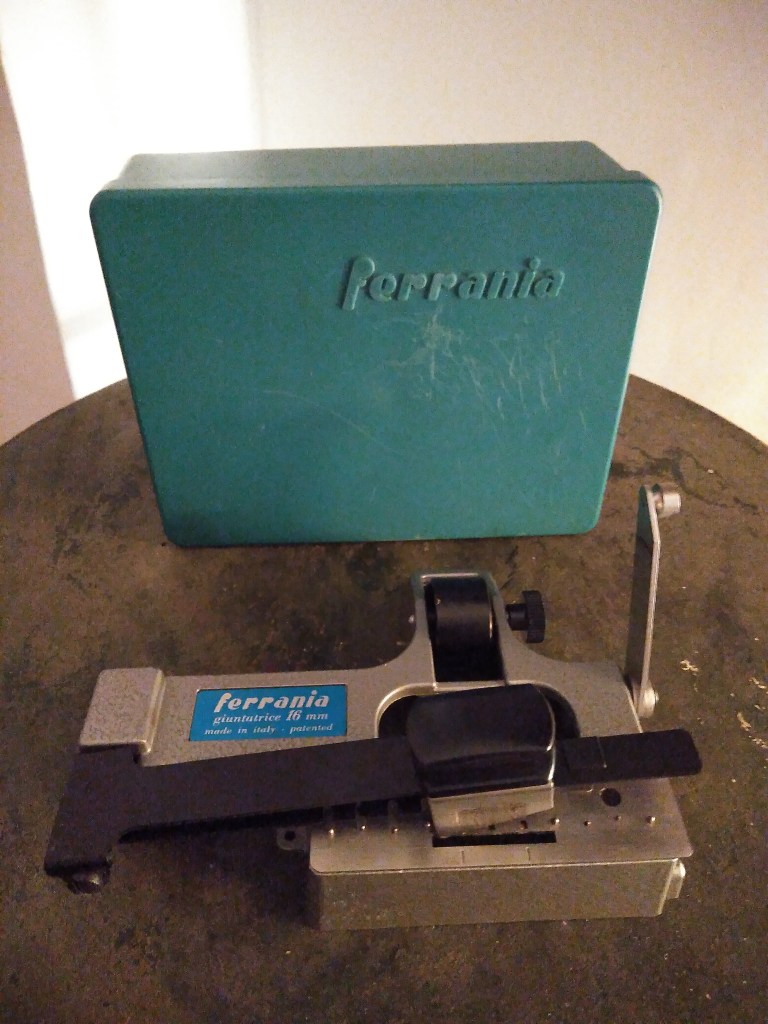
Exciting, unforgettable moments! Yet I had prepared everything days before having gone to a film rental for parishes and people’s homes; the manager, very kind, had given me six or seven pizzas (containers of 16 mm film) which I had soon viewed through the slow motion to choose the tracks to use to compose the collage. I also got a machine that used those who restored the tears to the films (do you remember when in cinemas all of a sudden they shed light and we had to wait for the patch? Years… 1950s or thereabouts). The exciting moments were about to begin: in my studio I had strung threads from one side of the room to the other to hang the first pieces of film. They rocked captivatingly as if to whet my sense of ultra-brave experimentation. They were there, perhaps too many, of varying lengths, coiled like snakes… I went under them, I went over them, giving almost frightened looks and trying to identify which were the most interesting to start the first gluing. Endless emotion! Other than panic of the blank sheet, this was real terror! Pasting could already be definitive, because the machine had to be used with a particular glue and once it was put it could not be removed; I risked losing frames and maybe the most interesting ones! But I started. The next day I called my team mates (Bueno, Miccini and Pignotti), I had to be comforted and helped; this happened with the utmost approval and collaboration. The first collage film Volerà was born in the 1970s and the others followed in collaboration with Pignotti or alone. But in November 1966 the flood swept away and ruined the films, the camera, the slow motion… my entire studio was submerged. I saved some visual poems that luckily I had taken to the upper floors of my house to show them to an aunt of mine; I found some film in the days following the disaster but I don’t remember having used it. The work on the film collage was thus completed and finished in the short space of a happy season.
© Riproduzione riservata | © All rights reserved | © Tous droits réservés | © Alle Rechte vorbehalten
22 giovedì Giu 2023
Posted in Eventi
Tag
Antonello Tolve, Arte Contemporanea, Contemporary Art, Filiberto Menna, Lucia Marcucci, Poesia Visiva, Stefania Zuliani, Tomaso Binga, Visual Poetry
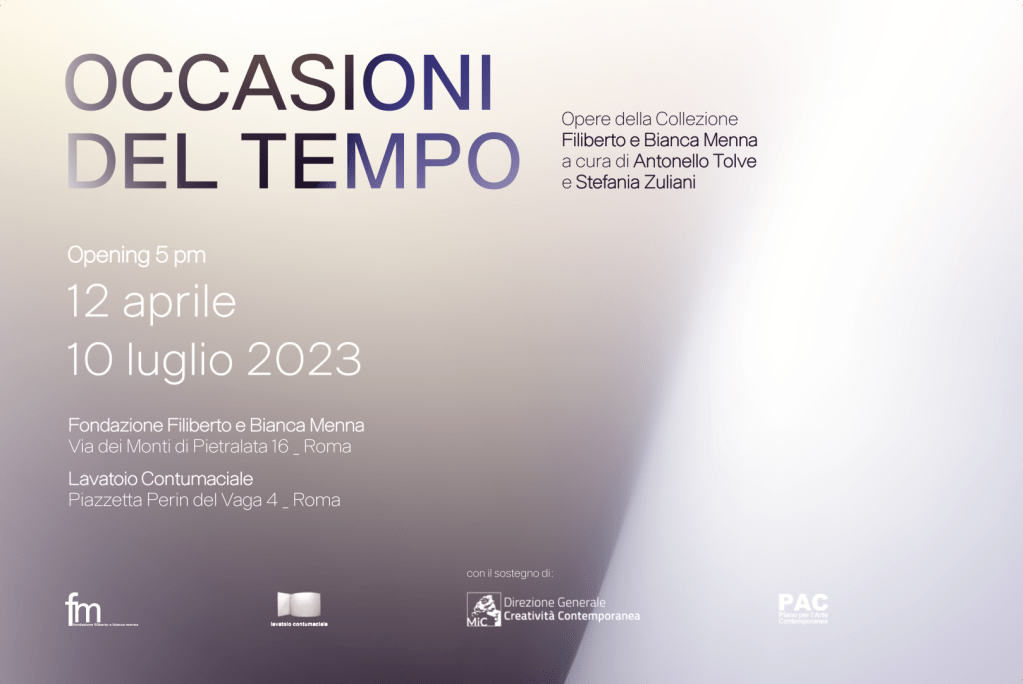
Nell’ambito del progetto del PAC2021 – Piano per l’Arte Contemporanea, la Fondazione Filiberto e Bianca Menna presieduta da Letizia Magaldi e il Lavatoio Contumaciale presieduto da Tomaso Binga, sono liete di annunciare Occasioni del tempo. Opere della Collezione Filiberto e Bianca Menna, l’importante esposizione che si terrà nella sede romana della Fondazione, già Archivio Tomaso Binga, in via dei Monti di Pietralata 16 e presso il Lavatoio Contumaciale, in Piazzetta Perin del Vaga 4, dal 12 aprile al 10 luglio 2023.

Occasioni del tempo è una esposizione che nasce dal desiderio di mostrare un nucleo delle 270 opere che Tomaso Binga (al secolo Bianca Pucciarelli Menna) ha deciso di donare alla Fondazione Filiberto e Bianca Menna, destinandole al patrimonio pubblico con l’idea di far nascere a Salerno un museo d’arte contemporanea e di offrire dunque alla città d’origine un polo delle arti. Si tratta nello specifico di un cospicuo gruppo di opere che attraversa periodi e climi artistici differenti, dalle Avanguardie Storiche e dai grandi movimenti di primo Novecento all’Arte Cinetica e Programmata, dalla Pop Art all’Arte Povera, dalla Poesia Visiva alla Pittura Analitica, dall’Astrazione Povera teorizzata dallo stesso Filiberto Menna ad alcune sfumature della galassia postmoderna. Nel suo insieme, si tratta di un nucleo organico, denso e interdipendente, che rispecchia appieno il gusto dei coniugi Menna, la loro storia, la loro avventura umana e culturale.
A cura di Antonello Tolve e Stefania Zuliani
© Riproduzione riservata
18 domenica Giu 2023
Posted in Archivio documenti, Scrittura
La mia strega, la mia dea, la mia setta, il mio amato mago è l’arte con tutti i suoi trabocchetti, i suoi cerchi e le sue contraddizioni. Navigare in un mare tempestoso con furibondi venti di maestrale su una zattera sottile spazzata da onde terrificanti, approdare nell’isola del sogno… l’arte! e ancora essere strapazzati da vicende piene di trappole e d’inganni: l’arte!
In quanto al mio lavoro, con le opere di poesia visiva, credo di andare al di là della scrittura, sono convinta che c’è meno travestimento, meno tradimento, meno mascheramento, sono più veritiere: la poesia visiva è una sfera di comunicazione che esclude la natura falsificante della scrittura, del demone della scrittura. Ma non voglio esaminare qui la mia opera, sono solo convinta di fare arte e ciò mi basta. Il problema è il fare arte, il perché fare arte: bisogno di trascendenza? bisogno di esorcizzare la morte? bisogno di totem?
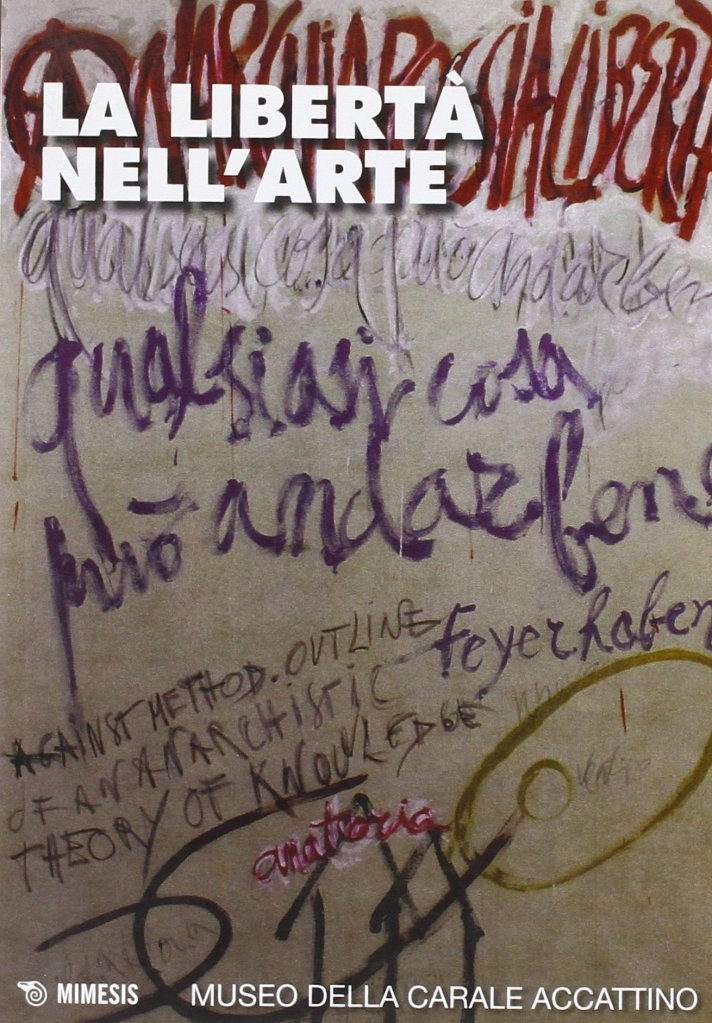
My witch, my goddess, my sect, my beloved wizard is art with all its pitfalls, circles and contradictions. Sailing in a stormy sea with furious mistral winds on a thin raft swept by terrifying waves, landing on the island of dreams… art! and still being overwhelmed by events full of traps and deceptions: art!
As for my work, with works of visual poetry, I think I go beyond writing, I am convinced that there is less disguise, less betrayal, less masking, they are more truthful: visual poetry is a sphere of communication that it excludes the falsifying nature of writing, of the demon of writing. But I don’t want to examine my work here, I am only convinced that I am making art and that is enough for me. The problem is making art, why making art: need for transcendence? need to exorcise death? need totems?
Lucia Marcucci – La libertà nell’arte, Museo della Carale Accattino, Mimesis Edizioni, 2010
© Riproduzione riservata | © All rights reserved | © Tous droits réservés | © Alle Rechte vorbehalten
15 giovedì Giu 2023
Posted in Eventi
Tag
Alba Savoi, Anna Boschi, Anna Esposito, Anna Maria Sacconi, Anna Torelli, Anna Uncini, Arte Contemporanea, Aurelia Muñoz, Betty Radin, Carla Vasio, Chiara Diamantini, Chima Sunada, Contemporary Art, Elisabetta Gut, Elly Nagaoka, Evangelía Biza, Fernanda Fedi, Franca Sonnino, Francesca Cataldi, Gisella Meo, Giulia Niccolai, Giulia Spernazza, Gramma_Epsilon Gallery, Greta Schödl, Irma Blank, Lia Drei, Lucia Marcucci, Maria Jole Serreli, Maria Lai, Marilena Scavizzi, Marilla Battilana, Mirella Bentivoglio, Paolo Cortese, Patrizia Molinari, Poesia Visiva, Renata Prunas, Rosanna Lancia, Saletta Tavares, Susanne Kessler, Virginia Lorenzetti, Visual Poetry
“Of all man’s instruments, the most wondrous, no doubt, is the book. The other instruments are extensions of his body. The microscope, the telescope, are extensions of his sight; the telephone is the extension of his voice; then we have the plow and the sword, extensions of the arm. But the book is something else altogether: the book is an extension of memory and imagination.”
(Jorge Luis Borges)

From June 15th to October 20th, Gramma_Epsilon Gallery in Athens presents the group exhibition “Books as Art” curated by Paolo Cortese. The exhibition, dedicated to the book as a form of art, showcases works of female artists from different generations and nationalities. Concrete and verbo-visual works that date back to the 1960s are placed in a dialogue with works by artists of later generations who continue to explore the multiple possibilities of the book as an expression of their art.
In the terminology established by Mirella Bentivoglio in the 1980s and 1990s during numerous group exhibitions dedicated to this particular form of artistic expression, ‘librista’ is used as a term that describes an artist who produces book-objects, the artist who is inspired by the form and the meaning of the book. Two universes are being put together: that of Logos, the language, which the works represent through their form, and that of the Mater, the matter, which the works celebrate through their substance. Two opposing dimensions that emerge in singular, communicative and silent poetic testimonies.
“In this era of the computer, in which the book has declined as a medium of verbal communication, its symbolism engraved in the subconscious renders it a new vehicle for global communication. In such a way the book-object has truly broken all customs and it is not known anymore whether it is a theme, a technique, a support or a movement. In a participatory and questioning way, it seems to indicate a general awareness of a new iconography of the Logos, which the human of our time recognizes and communicates”, writes Mirella Bentivoglio in 1990 when presenting a historical exhibit dedicated to ‘Librismo’ at the Art Duchamp Gallery in Cagliari. Furthermore, “they are volumes in both senses of the word; volumes considering their physicality. No longer vehicles of language, the books are symbols of the book; they dig deep into the psyche and find the archetype of the tables of the law. Books that undergo transformation in terms of form, structure, matter, giving rise to plastic-poetic circuits. Linguistic objects which by association move the work from the field of art to the suddenly complementary field of poetry”.
The works exhibited in Athens are three-dimensional, inspired by the book and the page, created by more than thirty international female artists from the area of conceptual, verbal, visual and fiber art of different countries and generations. Captivating and communicative works, realized in diverse materials, which are capable of bringing together with immediacy the world of the words with the universe of the materiality. Many works in this exhibition are historical examples and have been exhibited in the most prestigious museum venues. For the most part, they are unique pieces, together with examples of special editions.

During the opening, Maria Jole Serreli, a fiber artist from Sardinia, will realize her performance ‘The Forever Books’: ten books, containers of word and real stories, dressed in dreams, will be sealed forever preserving the memory of the intimate story of whoever owned them.
Artists: Marilla Battilana, Mirella Bentivoglio, Tomaso Binga, Evangelía Biza, Irma Blank, Anna Boschi, Francesca Cataldi, Chiara Diamantini, Lia Drei, Anna Esposito, Elisabetta Gut, Fernanda Fedi, Susanne Kessler, Maria Lai, Rosanna Lancia, Virginia Lorenzetti, Lucia Marcucci, Gisella Meo, Patrizia Molinari, Aurelia Muñoz, Elly Nagaoka, Giulia Niccolai, Renata Prunas, Betty Radin, Anna Maria Sacconi, Alba Savoi, Marilena Scavizzi, Greta Schödl, Maria Jole Serreli, Franca Sonnino, Giulia Spernazza, Chima Sunada, Saletta Tavares, Anna Torelli, Anna Uncini, Carla Vasio.
Curated by Paolo Cortese
Gramma_Epsilon Gallery, Athens, 15th June – 20th October, 2023
© Riproduzione riservata | © All rights reserved | © Tous droits réservés | © Alle Rechte vorbehalten
15 giovedì Giu 2023
Posted in Eventi
Tag
Alba Savoi, Anna Boschi, Anna Esposito, Anna Maria Sacconi, Anna Torelli, Anna Uncini, Arte Contemporanea, Aurelia Munoz, Betty Radin, Chiara Diamantini, Chima Sunada, Contemporary Art, Elisabetta Gut, Elly Nagaoka, Evangelía Biza, Fernanda Fedi, Franca Sonnino, Francesca Cataldi, Gisella Meo, Giulia Niccolai, Giulia Spernazza, Gramma_Epsilon Gallery, Greta Schödl, Irma Blank, Lia Drei, Lucia Marcucci, Maria Jole Serreli, Maria Lai, Marilena Scavizzi, Marilla Battilana, Mirella Bentivoglio, Paolo Cortese, Patrizia Molinari, Paula Claire, Poesia Visiva, Renata Prunas, Rosanna Lancia, Saletta Tavares, Susanne Kessler, Tomaso Binga, Virginia Lorenzetti, Visual Poetry
“Il libro è senza dubbio il più stupefacente tra gli strumenti costruiti dall’uomo. Gli altri sono estensione del suo corpo: il microscopio, il telescopio sono estensioni della sua vista, il telefono e la radio estensioni della sua voce, l’aratro, la fionda e il missile estensioni del braccio; ma il libro è un’estensione della memoria e dell’immaginazione” (Jorge Luis Borges)
Dal 15 Giugno al 20 Ottobre 2023 si tiene presso la Galleria Gramma_Epsilon di Atene una mostra dal titolo “Books as Art” a cura di Paolo Cortese.
In questa rassegna, dedicata la libro come forma di arte, sono messi a confronto lavori di artiste di diverse generazioni e nazionalità. Lavori concretisti e verbo-visuali risalenti agli anni ’60 sono messi in relazione a lavori di artiste di generazioni successive che continuano ad esplorare le molteplici possibilità del libro come espressione della loro arte.
Nella terminologia istituita da Mirella Bentivoglio lungo gli anni Ottanta e Novanta nel corso di numerose rassegne dedicate a questa particolare branca dell’espressione, si fa riferimento al “librista” come all’artista produttore di libri-oggetto, ossia un artista che si ispira alla forma e al significato del libro. Si sommano in sé due universi: quello del Logos, il linguaggio, che rappresentano nella loro forma, e quella di Mater, la materia, che celebrano nella loro sostanza. Due contrapposte dimensioni, che si fondono in singolari, comunicative e silenziose testimonianze poetiche.
“In quest’era del computer, in cui il libro sta per tramontare come medium di comunicazione verbale, la sua simbolicità incisa nell’inconscio lo porta a divenire un nuovo convenuto veicolo di comunicazione globale. Così il libro-oggetto ha veramente rotto tutte le consuetudini e non si sa più se è un tema, una tecnica, un supporto o un movimento. In modo partecipe e interrogativo esso sembra indicare una generale presa di coscienza di una nuova iconografia del logos, nella quale si riconosce e comunica l’uomo del nostro tempo.” scrive Mirella Bentivoglio nel 1990 presentando una storica mostra dedicata al “Librismo” presso la Galleria Art Duchamp a Cagliari. E ancora “Sono volumi nei due sensi della parola; volumi considerati nella loro fisicità. Non più meri veicoli del linguaggio, sono libri simboli del libro; scavano nel profondo della psiche e vi ritrovano l’archetipo delle tavole della legge. Libri che subiscono trasformazioni a livello di forma, struttura, materia, dando luogo a corto circuitazioni plastico-poetiche. Oggetti linguistici, che per associazione spostano l’opera dal piano dell’arte al piano improvvisamente complementare della poesia.”
Saranno in esposizione ad Atene opere tridimensionali ispirate al libro e alla pagina di oltre trenta artiste internazionali esponenti dell’area concettuale, verbo visuale e della fiber art di paesi e generazioni diverse. Opere captanti, comunicative, realizzate in materiali diversi, capaci di sposare con immediatezza il mondo della parola all’universo dell’esistenza.
Molte opere di questa mostra sono esempi storici e sono stati esposti nelle più prestigiose sedi museali. Per la maggior parte sono pezzi unici, ma insieme ad esemplari di stretta numerazione.
Artiste in mostra: Marilla Battilana, Mirella Bentivoglio, Tomaso Binga, Evangelía Biza, Irma Blank, Anna Boschi, Francesca Cataldi, Chiara Diamantini, Lia Drei, Anna Esposito, Elisabetta Gut, Fernanda Fedi, Susanne Kessler, Maria Lai, Rosanna Lancia, Virginia Lorenzetti, Lucia Marcucci, Gisella Meo, Patrizia Molinari, Aurelia Muñoz, Elly Nagaoka, Giulia Niccolai, Renata Prunas, Betty Radin, Anna Maria Sacconi, Alba Savoi, Marilena Scavizzi, Greta Schödl, Maria Jole Serreli, Franca Sonnino, Giulia Spernazza, Chima Sunada, Saletta Tavares, Anna Torelli, Anna Uncini, Carla Vasio.
A cura di Paolo Cortese
Gramma_Epsilon Gallery, Atene, 15 Giugno – 20 Ottobre, 2023
© Riproduzione riservata | © All rights reserved | © Tous droits réservés | © Alle Rechte vorbehalten
11 domenica Giu 2023
Posted in Eventi
Tag
Ar/Ge Kunst, Arte Contemporanea, Contemporary Art, Francesca Verga, Lucia Marcucci, Museion, Poesia Visiva, Visual Poetry, Zasha Colah
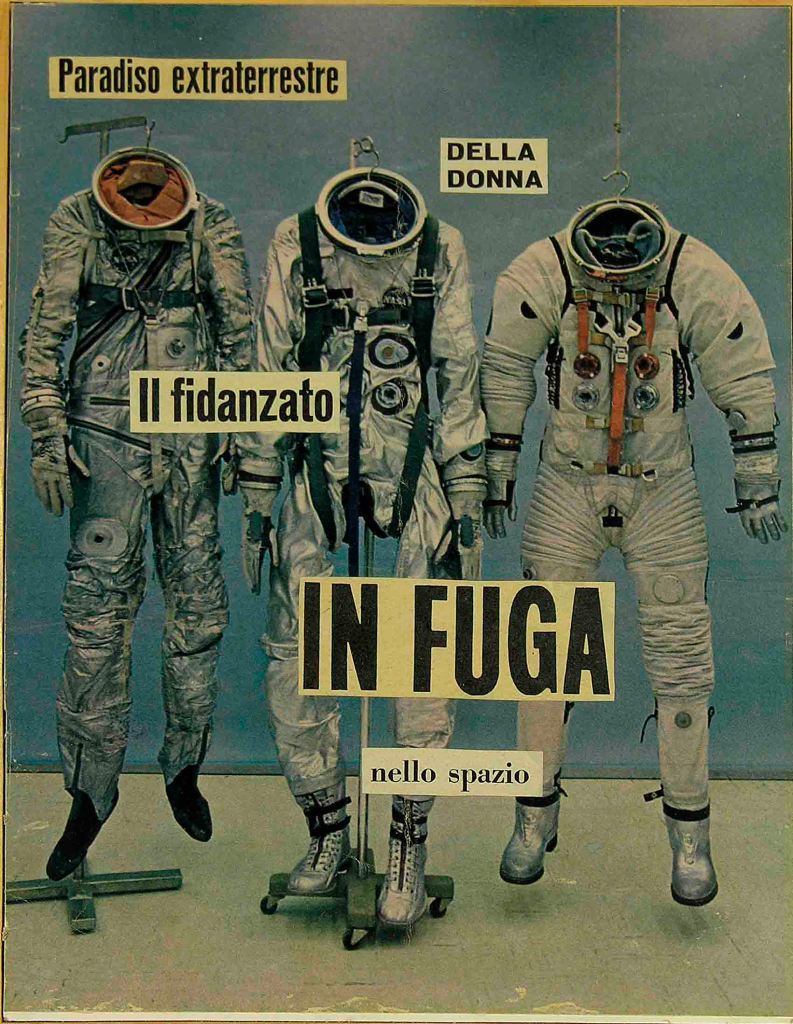
It was 1964 when artist Lucia Marcucci (Florence, 1933) created the work Il fidanzato in fuga: a collage on cardboard depicting three freestanding spacesuits, as if attached to clothes hangers, bodyless. The collage reads: “Paradiso extraterrestre della donna, il fidanzato in fuga nello spazio” (“A woman’s extra-terrestrial paradise: a fiance on the run in outerspace”). An ironic and provocatory phrase, it denounces the condition of contemporary women and showcases their need for freedom and transgression in a society obsessed with scientific and technological progress during the Cold War period, in constant ascent towards the ‘conquest’ of space. The following year, as part of Gruppo ’70, with Eugenio Miccini, Lamberto Pignotti and Antonio Bueno, Lucia Marcucci put up posters and then ripped them, including the poster L’Offesa, during their poetry shows Poesie e no (1964–1967). These were a series of multimedia happenings featuring poems as well as non-literary material. The events, particularly Poesie and no 3 (1965), drew on a range of languages—poetry readings, newspaper columns, slogans, extracts from novels, experimental film screenings and other ephemeral and volatile actions—to the music of Giuseppe Chiari. It was all put together in a Cubist-style collage of words and recitals, clips, scraps and offcuts, moving away from the linear construction of content.
Dorothy D. Lee (1905–1975) wrote about non-lineal thinking in the text ‘Lineal and Nonlineal Codifications of Reality’ (1950), which Marcucci would often quote.¹ In this text, the American anthropologist took the example of the interruption of the ‘thread of the discourse’ for people living in the Trobriand Islands, where it is accepted as something non-invasive in a culture characterised by the absence of linear continuity. Instead, the Western mindset that Marcucci challenges and criticises lulls itself into believing the line is the true path, that linear planning means success, increasingly thirsty for rectilinear progress. In this capitalist conception, there is no room left for failure as an interruption of linearly conceived movement. But is it so important to read reality through the presence of the line and reach a point on the horizon at a precise moment?
Lucia Marcucci seems to ask herself the same questions as Dorothy D. Lee, rooting her works along a pathway that is not a connection between two points but one that moves around, a source of continuous influences and obstacles, independent tracks, setbacks, failures and contestations. Her collages, like her works of cine-poetry, the non-linear montage technique—in particular Volerà nel ’70 (1965) and Pugni, Pistole e Baci (1966) —are reminiscent of many of Pedro Almodóvar’s films: a non-linear composition that steeps past and present in the narrative context. Dorothy D. Lee also referred to Trobriand verbs as timeless.² In these forms of conceiving, history and reality are always present, lending meaning to present actions. And this is how Marcucci plays it: rummaging through and drawing on her own past and that which surrounds us in the languages of mass communication, immersing us in a critical rereading of the present.
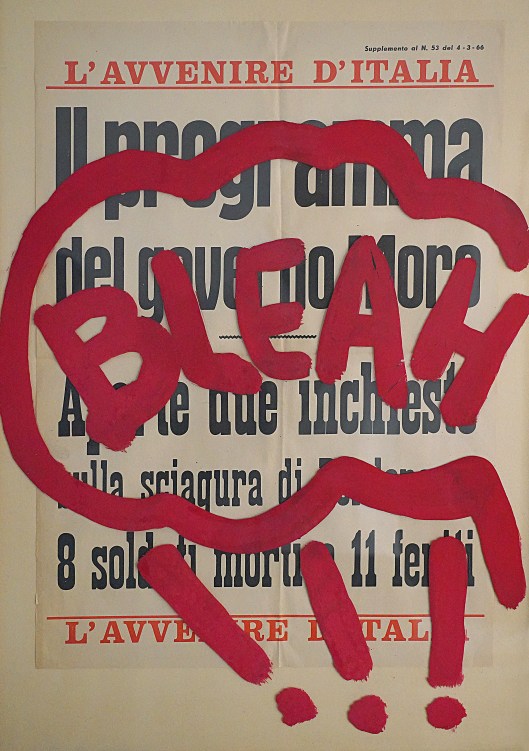
Lucia Marcucci stood out by virtue of her table-turning of the poetic word, which became part of the feminist struggles in the 1960s. What the artist defines as “returning the lexicon to the sender” means exploiting language with irony to pursue a critical redemption of stereotypes, of gender and the assumptions regulating representation of the female body, and of the forms and habits imposed upon it by capitalist society. The artist thus unveiled the nonsense and ideological emptiness underpinning mass communication, especially on topical issues. Bleah!!! (1967), a work on painted glass with a newspaper headline board, seemed to provide the only plausible answer at the time: one of outright dissent.
In 1965, Lamberto Pignotti published an anthology of visual poetry in the series Il Dissenso (published by Sampietro, Bologna). It consisted of four volumes featuring fragments of visual poetry, to be shuffled around like a pack of cards. From this moment on, the book form is extruded, exploding into the surrounding space and bringing the word to life beyond its container. There is no longer the word on paper but, like in Lucia Marcucci’s work, the word is brought back to the streets, squares and venues where civic relations might be established, and bodies along with them. But what role did (and does) the body—its perception, gesture and language—play within poetic struggle?
On the occasion of the artist’s ninetieth birthday, the exhibition L’Offesa at Ar/Ge Kunst (9 June – 29 July 2023), curated by Francesca Verga and Zasha Colah, retraces some of the artist’s works from the 1960s up to the 1990s on loan from the Lucia Marcucci Archive and the Frittelli Arte Contemporanea Gallery. The exhibition re-examines how speech, advertising, media and paper were questioned in the 1960s and 1970s through militant practices intensifying verbal and bodily presence. For it is through both body and word that the poetic worth of the stroke and its imaginative value may be rediscovered.
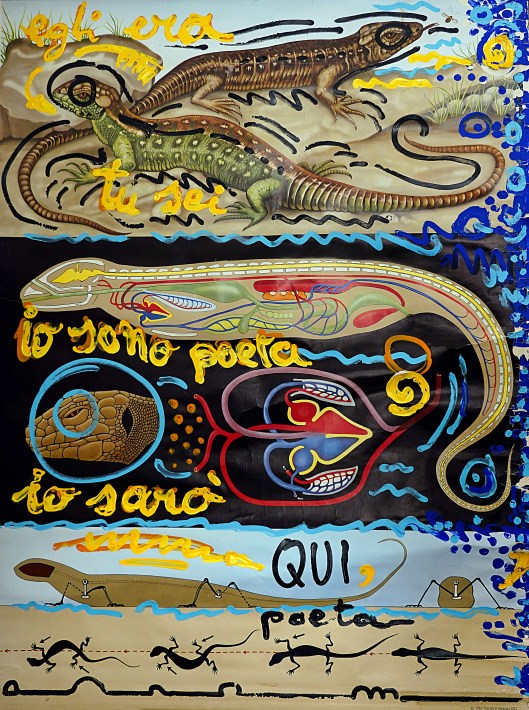
On display are a number of works created from the 1960s onwards on the verbo-visual side of technological poetry, auditory poetry, cine-poetry (such as the works Volerà nel ’70, 1965, and poesia auditiva, 1970), collages on cardboard and non-linear montage techniques. Together with these, the acrylics on prints and posters, such as Sigh (1968), Waah! (1968) and Boh, eh (1970), constitute a pivotal moment in the display of political and social dissent in poetic terms. Furthermore, there is also a return to the manual skills of the 1970s: the imprints of the artist’s body on emulsified canvases, along with the imprints, signs and words on her didactic tables produced in the 1990s reconfirm the artist’s interest in visceral dissections of the body and the link between body and word, continuing to toy with scientific contexts.
The exhibition L’Offesa at Ar/Ge Kunst also develops a critical reflection on the contemporary sphere by placing some of Lucia Marcucci’s works in dialogue with the voices of other artists. An audio-visual and installation work by the artist Wissal Houbabi brings dissent and struggles in today’s society in dialogue with Marcucci’s politics; Elena Biserna with the scores of The Resounding Flâneuse and the Feminist Steps walk (9–10 June 2023, Bolzano), explores the (auditory) experiences of the nocturnal city from a gendered perspective. And as part of Bolzano Danza, the dancer Annamaria Ajmone and the musician Laura Agnusdei present Bleah!!! (20–21 July 2023, Parco dei Cappuccini, Bolzano): a performance that blends gesture and sound in assemblages that are a table-turning of notions of the temporal, spatial and authorial.
The show at Ar/Ge Kunst is further complemented by the exhibition Lucia Marcucci. Poesie e no at Museion, Bolzano, curated by Frida Carazzato. The two solo shows revolve around the experience that gave rise to the Poesie e no happenings. The collage of visual and linguistic signs that characterises this series of performances allows the two institutions to explore two complementary strands of Marcucci’s work: on the one hand the investigation of language starting with the critique of consumer society that finds space in Museion, and on the other, the presence of the word and body in social militancy, through the interpretation further manifested by other contemporary voices in the Ar/Ge Kunst show.
Curatorial text by Francesca Verga and Zasha Colah, Ar/Ge Kunst, 2023.
Translation from Italian to English: Ben Bazalgette, 2023.
¹ Lee, Dorothy, „Lineal and Nonlineal Codifications of Reality“, in: Symbolic Anthropology: A Reader in the Study of Symbols and Meanings, hg. von Dolgin, Janet L., Kemnitzer, David S. und Schneider, David M., New York 1977, S. 151–164.
² Dorothy D. Lee, „Being and Value in a Primitive Culture“, in: dies., Freedom and Culture, Englewood Cliffs 1959, S. 89–104; „Codifications of Reality: Lineal and Nonlineal“, in: ebd. S. 105–120.
© All rights reserved
…
Es ist das Jahr 1964, und die Künstlerin Lucia Marcucci (*1933 in Florenz) gestaltet auf Karton die Collage Il fidanzato in fuga. Darauf dargestellt sind drei aufrecht stehende Raumanzüge, die aufgehängt sind wie Marionetten, aber ohne Körper. Collagiert ist zu lesen: „Das außerirdische Paradies der Frau, der Verlobte auf der Flucht ins All.“ Ein so ironischer wie provokanter Satz, der die Befindlichkeit der zeitgenössischen Frau spiegelt und ihren Anspruch auf Freiheit und Überschreitung in einer Gesellschaft betont, die besessen war von Wissenschaft, Technologie und Fortschritt und sich zur damaligen Zeit in einem kontinuierlichen Aufstieg hin zur „Eroberung“ des Weltraums wähnte. Im darauffolgenden Jahr hängte Lucia Marcucci – als Teil des Gruppo ’70 – zusammen mit Eugenio Miccini, Lamberto Pignotti und Antonio Bueno Plakate auf, nur um sie anschließend zu zerreißen, so geschehen etwa mit der Arbeit L’Offesa im Zuge ihrer gemeinsam aufgeführten Poesie-Spektakel Poesie e no (1964–1967). Dabei handelte es sich um eine Reihe multimedialer Happenings unter Einbeziehung von Gedichten sowie Matrixmaterialien außerliterarischer Herkunft. Im Rahmen dieser Veranstaltungen, allen voran Poesie e no 3 (1965), verbanden sich verschiedene Formen von Sprache: das Vorlesen von Gedichten, Zeitungskolumnen, Slogans und Romanauszügen mit der Vorführung experimenteller Filme und weiteren ebenso flüchtigen wie vergänglichen Aktionen zur Musikbegleitung Giuseppe Chiaris. Dies alles fügte sich zu einer aus Wörtern und Rezitationen, Ausschnitten, Fragmenten, Schnipseln und Überbleibseln gefügten Collage, die sich von einer linearen Konstruktion der Inhalte entfernte.
Über das nicht-lineare Denken hatte sich bereits Dorothy D. Lee (1905–1975) in dem von Marcucci gern zitierten Text „Lineare und nicht-lineare Kodifizierungen der Realität“ (1977) geäußert.¹ Darin führte die amerikanische Anthropologin die Bewohner*innen der Trobriand-Inseln als Beispiel für eine Kultur an, die durch das Fehlen von linearer Kontinuität geprägt ist und somit eine Unterbrechung des „Diskursfadens“ als nicht störend empfindet. Das von Marcucci infrage gestellte und kritisierte westliche Denken hingegen gibt sich der Illusion hin, dass die Linie unser Weg wäre und lineare Planung der Weg zum Erfolg, angetrieben von einem immer unersättlicheren Bedürfnis nach geradlinigem Fortschritt. In dieser kapitalistischen Vorstellungswelt bleibt kein Raum für das Scheitern, für die Unterbrechung einer als linear gedachten Bewegung. Ist es aber tatsächlich so wichtig, die Wirklichkeit über die Gegenwart der Linie zu lesen und zu einer bestimmten Zeit an einem bestimmten Ort am Horizont anzukommen?
Lucia Marcucci scheint sich die gleichen Fragen zu stellen wie Dorothy D. Lee, spürt in ihren Werken einer Spur nach, die keine Verbindung zwischen zwei Punkten darstellt, sondern in Bewegung ist, eine Quelle immer neuer Einflüsse sowie Ursache von Flecken, von eigenen Wegfindungen, Rückschritten, Fehlschlägen und Anfechtungen. Ihre Collagen erinnern ebenso wie ihre kinopoetischen Werke – vor allem Volerà nel ’70 (1965) und Pugni, Pistole e Baci (1966) – vielfach an die Filme Pedro Almodóvars, verknüpfen Vergangenes und Gegenwärtiges in einer Erzählung, die ohne Linearität auskommt. Schon Dorothy D. Lee hatte die trobriandischen Verben als zeitlos bezeichnet.² Folgt man diesen Vorstellungen, so sind Geschichte und Wirklichkeit stets gegenwärtig und geben unserem aktuellen Handeln einen Sinn ein. Und damit spielt Marcucci: Sie durchstöbert die eigene Vergangenheit, schneidet sich durch das, was uns die Sprachformen der Massenkommunikation zur Verfügung stellen, und lässt uns in eine kritische neue Lesart der Gegenwart eintauchen.
Ihr Werk zeichnet sich durch eine Umkehrung des poetischen Wortes aus, die auch Eingang in die feministischen Kämpfe der 1960er-Jahren fand. Wenn die Künstlerin davon spricht, „das Lexikon an den Absender zurückzusenden“, so bedeutet das, über einen ironischen und kritischen Gebrauch von Sprache eine Befreiung von Geschlechterstereotypen, von Annahmen über die Darstellung des weiblichen Körpers ebenso wie von aufoktroyierten Praktiken und Gewohnheiten der kapitalistischen Gesellschaft zu erreichen. Gerade in Bezug auf aktuelle Themen entlarvt Marcucci die sich hinter der Massenkommunikation auftuende Unsinnigkeit und ideologische Leere. Die Arbeit Bleah!!! (1967), bestehend aus bemaltem Glas und Zeitungsreklame, schien zur damaligen Zeit die einzig plausible Antwort zu geben: Dissens.
1965 veröffentlichte Lamberto Pignotti einen Sammelband visueller Poesie, der in der Reihe „Il Dissenso“ (Sampietro, Bologna) erschien. Die vier Bände beinhalten Fragmente visueller Poesie, die sich ähnlich wie Spielkarten mischen lassen. Ab diesem Moment dehnt sich das Buch aus, explodiert in den umgebenden Raum und lässt das Wort außerhalb seines Behälters lebendig werden. Somit steht das Wort nicht mehr nur auf dem Papier, sondern wird – wie auch im Werk Lucia Marcuccis – wieder auf Straßen und Plätze, in Leben und Orte gebracht, an denen Zivilbürgerschaft stattfindet, und mit ihr der Körper. Welche Rolle aber spielten (und spielen) der Körper und seine Wahrnehmung, die Geste und die Sprache im poetischen Kampf?
Anlässlich des 90. Geburtstags Lucia Marcuccis zeigt die Ar/Ge Kunst in der Ausstellung L’Offesa (9. Juni – 29. Juli 2023) verschiedene Werke der Künstlerin aus den 1960er- bis 1990er-Jahren, die von ihrem Archiv sowie der Galerie Frittelli Arte Contemporanea (Florenz) als Leihgaben zu Verfügung gestellt wurden. Die von Francesca Verga und Zasha Colah kuratierte Schau führt vor Augen, wie Sprache, Werbung, Medien und Papier in den 1960er- und 1970er-Jahren von einer militanten Praxis auf den Prüfstand gestellt wurden, die auf verbale und physische Gegenwart setzte. Anhand von Körper und Wort entdeckte sie die poetische Gültigkeit des Zeichens und seinen imaginativen Wert neu.
Gezeigt werden ab den 1960er-Jahren entstandene verbo-visueller Werke der technologischen und auditiven Poesie, Kinopoesien mit nicht-linearen Montagetechniken (etwa die Arbeiten Volerà nel ’70 von 1965 und Poesia auditiva von 1970) sowie Collagen auf Karton. Daneben bieten auch die Acrylübermalungen von Reklame sowie Plakate wie Sigh (1968), Waah! (1968), Boh, eh (1970) kardinale Beispiele für die Formulierung politischen und gesellschaftlichen Dissenses in einer poetischen Tonart. Ebenfalls thematisiert wird die Rückbesinnung der 1970er-Jahre auf eine manuell geprägte Herangehensweise, etwa in den eigenen Körperabdrücken der Künstlerin auf emulgierten Leinwänden. Auch die Gesten, Zeichen und Wörter auf Schautafeln der 1990er-Jahre bestätigen erneut Marcuccis Interesse an viszeralen Bereichen des Körpers und seiner Verbindung zum Wort sowie den spielerischen Umgang der Künstlerin mit wissenschaftlichen Kontexten.
Darüber hinaus unternimmt die Ausstellung L’Offesa eine kritische Reflexion aus zeitgenössischer Perspektive, indem sie einige Werke Lucia Marcuccis in einen Dialog mit den Stimmen anderer Künstler*innen stellt. So bringt etwa die Künstlerin Wissal Houbabi eine audiovisuelle Installation in den Raum des Dissenses und der antirassistischen Kämpfe unserer heutigen Gesellschaft ein; Elena Biserna erkundet mithilfe der Partituren The Resounding Flâneuse und dem Spaziergang Feminist Steps (9./10. Juni 2023, Bozen) die (Hör-)Erfahrungen der nächtlichen Stadt aus einer geschlechtsbezogenen Perspektive; und im Rahmen von Bolzano Danza zeigen die Tänzerin Annamaria Ajmone und die Musikerin Laura Agnusdei die Geste und Klang verbindende Partitur Bleah!!! (20./21. Juli 2023, Kapuzinerpark, Bozen), die mit Assemblagen und dem Durchbrechen zeitlicher, räumlicher wie auktorialer Zusammenhänge arbeitet.
Die Ausstellung in der Ar/Ge Kunst wird ergänzt durch die von Frida Carazzato kuratierte Schau Lucia Marcucci. Poesie e no im Museion in Bozen. Beide Einzelpräsentationen kreisen um Erfahrungen, die zur Entstehung des Happenings Poesie e no geführt haben. Die mehrfach aufgeführte Performance zeichnet sich durch eine collageartige Nebeneinanderstellung visueller und sprachlicher Zeichen aus und wird zum Anlass, um in beiden Einrichtungen jeweils komplementäre Stränge von Marcuccis Œuvre zu beleuchten: So findet die von einer Kritik an der Konsumgesellschaft ausgehende Untersuchung von Sprache ihren Raum im Museion, während die Gegenwart von Wort und Körper im Aktivismus eine Re-Lektüre auch durch zeitgenössische Stimmen in der Ar/Ge Kunst erfährt.
Kuratorischer Text, Francesca Verga und Zasha Colah, Ar/Ge Kunst, 2023.
übersetzt von Ursula Fethke
¹ Lee, Dorothy, „Lineal and Nonlineal Codifications of Reality“, in: Symbolic Anthropology: A Reader in the Study of Symbols and Meanings, hg. von Dolgin, Janet L., Kemnitzer, David S. und Schneider, David M., New York 1977, S. 151–164.
² Dorothy D. Lee, „Being and Value in a Primitive Culture“, in: dies., Freedom and Culture, Englewood Cliffs 1959, S. 89–104; „Codifications of Reality: Lineal and Nonlineal“, in: ebd. S. 105–120.
© Alle Rechte vorbehalten
 LUCIA MARCUCCI