• Home
  • Biografia | Biography | Biographie | Biografie
  • Mostre | Exhibitions | Expositions | Ausstellungen
  • Contatti | Contacts | Kontakte
  • Autentiche e autorizzazioni | Authentication and authorizations

LUCIA MARCUCCI

LUCIA MARCUCCI

Archivi tag: MAMAC

LUCIA MARCUCCI. I SEGRETI DEL LINGUAGGIO / LUCIA MARCUCCI. LES SECRETS DU LANGAGE

28 sabato Mag 2022

Posted by Lucia Marcucci in Eventi

≈ Lascia un commento

Tag

Arte Contemporanea, Contemporary Art, Hélène Guenin, Lucia Marcucci, MAMAC, Olivier Bergesi, Poesia Visiva, Visual Poetry

«Simili ai miei sogni estatici sono le intenzioni provocatorie delle mie opere: il desiderio di comunicare, il desiderio di instaurare un filo ininterrompibile con gli altri, e nello stesso tempo, appunto, di provocare stupore, magari anche indignazione o scandalo».1

«Similar to my ecstatic dreams are the provocative intentions of my works: the desire to communicate, the desire to establish an uninterrupted thread with others, and at the same time, in fact, to provoke amazement, perhaps even indignation or scandal».1

Lucia Marcucci – E’ guerra d’eroi (1965)

In occasione della prima esposizione individuale tenutasi in Francia intitolata Lucia Marcucci. Les secrets du langage – Galleria Contemporanea, MAMAC – verrà presentato un confronto tra le opere eseguite durante gli anni Sessanta e Settanta con riferimenti a problematiche socio-politiche di quel tempo, e la sua produzione più recente del primo decennio del 2000 per la maggior parte incentrata sulla critica della pubblicità e della cultura dominante. L’abbondanza di parole, messaggi e immagini fluttuanti invita il visitatore a immergersi completamente nell’universo poetico dell’artista.

On the occasion of the first individual exhibition held in France entitled Lucia Marcucci. Les secrets du langage – Contemporary Gallery, MAMAC – a comparison will be presented between the works performed during the sixties and seventies with references to socio-political issues of that time, and his most recent production of the first decade of 2000 for the most part focused on critique of advertising and dominant culture. The abundance of words, messages and floating images invites the visitor to immerse themselves completely in the artist’s poetic universe.

Lucia Marcucci – I consigli della settimana (1965)

Nata a Firenze nel 1933, Lucia Marcucci è una delle protagoniste principali della poesia visuale in Italia ed una delle rappresentanti di spicco del Gruppo 70. Abbandonati gli studi presso l’Accademia di Belle Arti, nel 1955 si trasferì a Livorno per iniziare a lavorare nel Grattacielo, un teatro d’avanguardia dove collaborò quale assistente del direttore e come creatrice di maschere, annunci pubblicitari e scenografie. Nel 1963 iniziò a mostrare interesse per la poesia visiva, creando i suoi primi collage letterari ove il linguaggio puramente teatrale si mescolava ad espressioni desunte dal gergo popolare.

Born in Florence in 1933, Lucia Marcucci is one of the main protagonists of visual poetry in Italy and one of the leading representatives of the 70 Group. Abandoned her studies at the Academy of Fine Arts, in 1955 she moved to Livorno to start working in Skyscraper, an avant-garde theater where she collaborated as assistant to the director and as a creator of masks, advertisements and sets. In 1963 he began to show interest in visual poetry, creating his first literary collages where purely theatrical language was mixed with expressions derived from popular jargon.

Lucia Marcucci – L’offesa (1964)

Uno dei suoi primi collage, intitolato “L’indiscrezione è forte” (1963), è composto da fogli di carta piegati insieme e saturati con frasi stampate desunte da libretti d’opera dell’Ottocento, frammenti poetici, saggi letterari e politici, ma soprattutto annunci pubblicitari e ritagli di giornale. Seguirono nel 1964 i manifesti “L’offesa” e “Un proverbio cinese”, entrambi realizzati con l’impego di caratteri impressi tramite l’uso di matrici lignee. Durante lo stesso periodo Marcucci invitò i membri fiorentini del Gruppo 70 – fondato nel 1963 da Eugenio Miccini, Lamberto Pignotti e Antonio Bueno durante la conferenza “Arte e Comunicazione” tenutasi presso il Forte Belvedere in Firenze – per mettere in scena “Poesie e no” (1963), happening di successo riproposto in diverse occasioni dal gruppo. Scopo primario degli artisti aderenti a questo gruppo risultava la rivalutazione del linguaggio nel periodo frenetico dello sviluppo delle comunicazioni di massa: la parola viene trattata come un oggetto propriamente autonomo tra nuovi sistemi di comunicazione. La relazione tra “immagine” e “parola” diventa il campo di gioco per ogni possibile sperimentazione, promuovendo la tecnica del collage quale principale mezzo espressivo. Il gruppo si separò alla fine del 1968, ma Lucia Marcucci, insieme ad altri poeti visuali, fondarono in seguito il Gruppo di Poesia Visiva Internazionale, le cui riviste Lotta poetica e De Tafelronde divennero emblematiche.

One of his first collages, entitled “Indiscretion is strong” (1963), is made up of sheets of paper folded together and saturated with printed phrases taken from nineteenth-century opera librettos, poetic fragments, literary and political essays, but especially advertisements and newspaper clippings. The posters “The offense” and “A Chinese proverb” followed in 1964, both made with the use of characters impressed through the use of wooden matrices. During the same period Marcucci invited the Florentine members of Gruppo 70 – founded in 1963 by Eugenio Miccini, Lamberto Pignotti and Antonio Bueno during the “Art and Communication” conference held at the Forte Belvedere in Florence – to stage “Poesie e no” (1963), a successful happening repeated on several occasions by the group. The primary purpose of the artists belonging to this group was the re-evaluation of language in the frenetic period of the development of mass communications: the word is treated as a properly autonomous object among new communication systems. The relationship between “image” and “word” becomes the playing field for any possible experimentation, promoting the collage technique as the main means of expression. The group separated at the end of 1968, but Lucia Marcucci, together with other visual poets, later founded the International Visual Poetry Group, whose magazines Lotta poetica and De Tafelronde became emblematic.

Lucia Marcucci – I segreti del linguaggio (1970)

Composto da ritagli di riviste e annunci pubblicitari con messaggi incapsulati in “nuvolette” prese in prestito da comics, il lavoro di Lucia Marcucci reinterpreta problemi politici e sociali del suo tempo, spesso trattati con sottile ironia e provocazione, enfatizzando la condizione delle donne nella società contemporanea e l’oggettizzazione delle loro immagini. Nel lavoro fotografico intitolato “La ragazza squillo” (1965), è l’artista stessa a posare con un cartello stradale tra le braccia, indicando la presenza fisica di una cabina telefonica, espediente che le permette di denunciare il cliché della donna-oggetto, disponibile dopo una sola chiamata, e quindi priva d’identità e personalità. In “Come ama, come lavora” (1972), l’artista ricorre agli stessi espedienti visivi per denunciare lo stereotipo della perfetta donna di casa, efficiente nella vita pubblica come nei suoi doveri domestici.

Composed of magazine clippings and advertisements with messages encapsulated in “clouds” borrowed from comics, Lucia Marcucci’s work reinterprets political and social problems of her time, often treated with subtle irony and provocation, emphasizing the condition of women in society contemporary and the objectification of their images. In the photographic work entitled “The call girl” (1965), it is the artist herself who poses with a road sign in her arms, indicating the physical presence of a telephone booth, an expedient that allows her to denounce the cliché of the woman-object, available after a single call, and therefore devoid of identity and personality. In “How he loves, how he works” (1972), the artist uses the same visual devices to denounce the stereotype of the perfect housewife, efficient in public life as well as in her domestic duties.

Lucia Marcucci – I segreti della stampa (1971)

Durante i primi anni Settanta l’artista, come altri poeti visuali, sperimentò con l’uso dell’emulsione su tela (una tecnica di trasferimento fotografico), proponendo spesso immagini prese dalla Storia dell’Arte. L’uso del bianco e nero e la totale piattezza o bidimensionalità dell’immagine risultante da questa tecnica rende più incisiva la sovrapposizione, o più spesso il solo contorno, di testo e immagine. In “Ecologia” (1973), Marcucci altera un dipinto di Daniel Fröschel raffigurante Adamo ed Eva, aggiungendovi la parola del titolo e sostituendo il frutto proibito con una granata disegnata, manifestando quindi il suo personale punto di vista sull’impatto dei confronti internazionali concernenti la salvaguardia dell’ambiente.

During the early seventies the artist, like other visual poets, experimented with the use of emulsion on canvas (a photographic transfer technique), often proposing images taken from the History of Art. The use of black and white and the total flatness or two-dimensionality of the image resulting from this technique makes the overlapping, or more often only the outline, of text and image more incisive. In “Ecology” (1973), Marcucci alters a painting by Daniel Fröschel depicting Adam and Eve, adding the title word and replacing the forbidden fruit with a drawn grenade, thus expressing his personal point of view on the impact of international comparisons concerning safeguarding the environment.
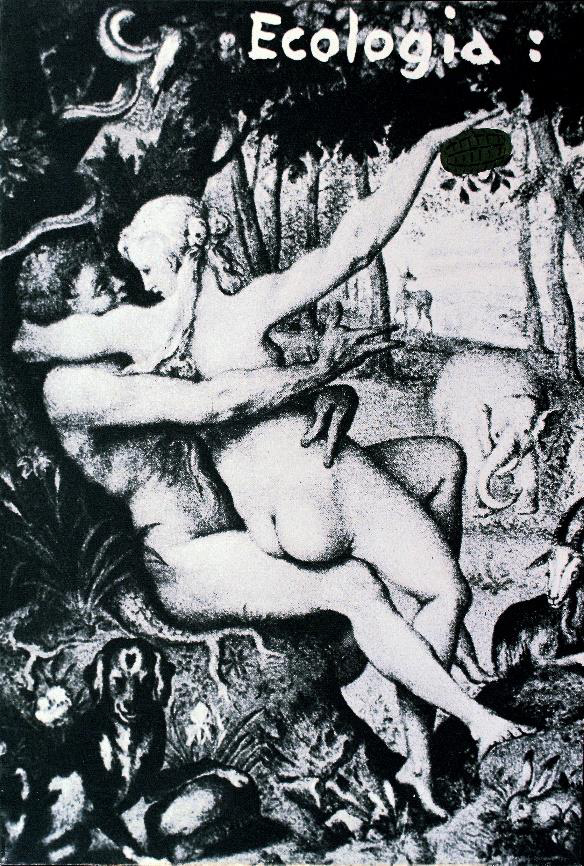
Lucia Marcucci – Ecologia (1973)

A partire dal 1976 i suoi lavori mostrano tracce della sua presenza fisica con l’aggiunta di frasi o iscrizioni eseguite direttamente a mano, i motti e le immagini diventano più autobiografiche o antropomorfiche. “Aa, Bb, Cc” (1977), dalla serie “Impronte”, venne presentato nella esposizione “Materializzazioni del linguaggio” durante la Biennale di Venezia del 1978. In questa stampa, il campionario alfabetico si mescola con le impronte dei seni e del ventre dell’artista stessa, facendo allusione alle immagini delle Veneri preistoriche e all’iconografia della Dea Madre.

Since 1976 his works show traces of his physical presence with the addition of phrases or inscriptions made directly by hand, the mottos and images become more autobiographical or anthropomorphic. “Aa, Bb, Cc” (1977), from the “Impronte” series, was presented in the exhibition “Materializations of language” during the 1978 Venice Biennale. In this print, the alphabetical sample mixes with the imprints of the breasts and belly of the artist herself, alluding to the images of prehistoric Venuses and the iconography of the Mother Goddess.
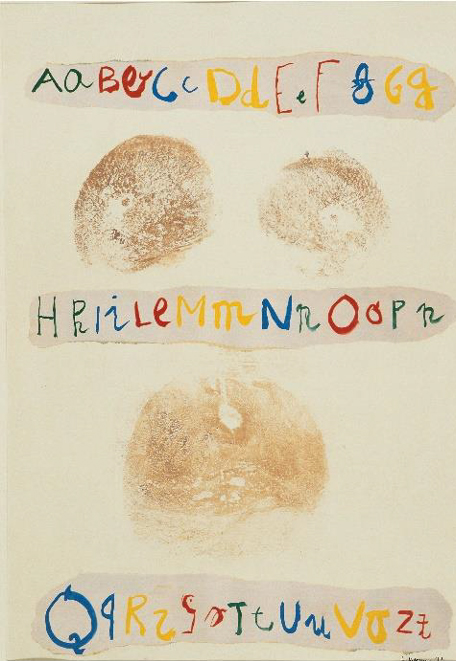
Lucia Marcucci – Aa, Bb, Cc, (1977)

La produzione più recente dell’artista (2000-2010) offre una ricerca ibrida che include poesia, musica, performance e comunicazione di massa, ricordando sempre il potere straordinario dell’immagine. Nella serie intitolata “Città Larga”, Lucia Marcucci propone una manipolazione di una tipologia di mezzo pubblicitario largamente diffuso agli inizi del Millennio nelle aree urbane: bandiere di tela appese sui lampioni su cui campeggiano immagini concepite secondo una logica popolare che mai si allontana dai più collaudati cliché. L’artista utilizza tali immagini per cambiare il loro significato o per accentuare l’assurdità che governa la relazione tra immagine e testo. Come nel lavoro intitolato “Sacro” (2012), ove un annuncio pubblicitario per la vendita di un liquore viene ironicamente trasformato in una apologia per telefoni mobili, o in “Our Lady” (2009), dove un annuncio pubblicitario di moda viene distorto fino a trasformarsi in una immagine biblica per amplificare il cliché della donna perfetta venduto dai media e denunciare i dettami dell’industria della moda.

The artist’s most recent production (2000-2010) offers a hybrid research that includes poetry, music, performance and mass communication, always remembering the extraordinary power of the image. In the series entitled “Città Larga”, Lucia Marcucci proposes a manipulation of a type of advertising medium widespread at the beginning of the millennium in urban areas: canvas flags hung on the street lamps on which images conceived according to a popular logic that never strays from the most proven clichés. The artist uses these images to change their meaning or to accentuate the absurdity that governs the relationship between image and text. As in the work entitled “Sacred” (2012), where an advertisement for the sale of a liquor is ironically transformed into an apology for mobile phones, or in “Our Lady” (2009), where a fashion advertisement is distorted into to transform into a biblical image to amplify the cliché of the perfect woman sold by the media and denounce the dictates of the fashion industry.

Lucia Marcucci – Our Lady (2009)

L’incitamento al consumo promosso dai mass media, con le sue immagini invasive e alienanti, avrebbero permesso a Lucia Marcucci di creare una nuova forma di linguaggio critico attraverso la poesia visiva, come d’altronde spiegato dall’artista stessa: “L’opera di poesia visiva dunque non nasce dalla letteratura o dalla pittura ma come opera autonoma del conflitto dell’uomo con i mezzi di comunicazione di massa”.

The incitement to consumption promoted by the mass media, with its invasive and alienating images, would have allowed Lucia Marcucci to create a new form of critical language through visual poetry, as explained by the artist herself: “The work visual poetry therefore does not arise from literature or painting but as an autonomous work of man’s conflict with the mass media”.
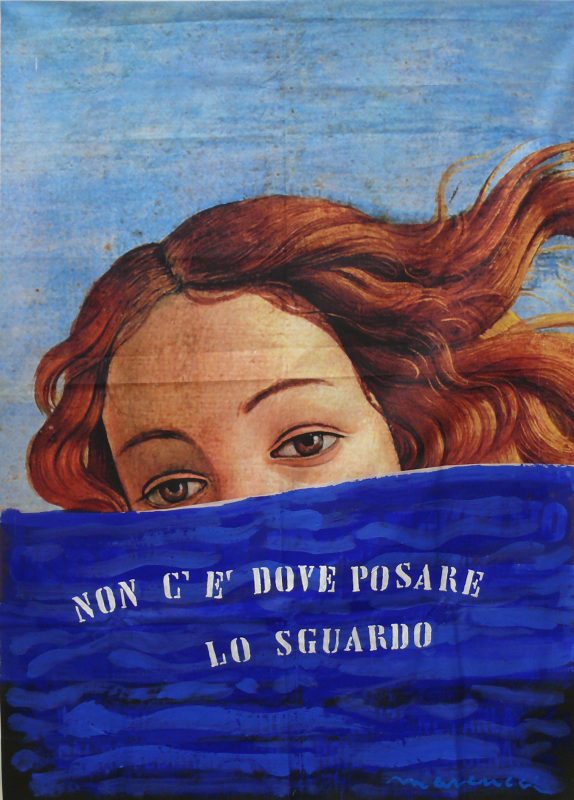
Lucia Marcucci – Non c’è dove posare lo sguardo (2012)

Il lavoro di Lucia Marcucci è stato messo in evidenza al MAMAC nelle mostre collettive “She-Bam Pow Pop Wizz! Les Amazones du POP”, 2020-21 – a cura di Hélène Guenin e Géraldine Gourbe; e “Vita Nuova. Nuovi numeri nell’arte in Italia 1960-1975”, estate 2022 – a cura di Valérie Da Costa.

Lucia Marcucci’s work was highlighted at the MAMAC in the group exhibitions “She-Bam Pow Pop Wizz! Les Amazones du POP”, 2020-21 – curated by Hélène Guenin and Géraldine Gourbe; and “Vita Nuova. Nouveaux enjeux de l’art en Italie 1960-1975”, summer 2022 – curator Valérie Da Costa.

1. Lucia Marcucci, Memorie e incanti. Extraitinerario autobiografico, Campanotto Editore, 2005

Curatore della mostra / Exhibition curator: Olivier Bergesi (MAMAC)

Direttrice / Director of MAMAC: Hélène Guenin

In collaborazione con / In collaboration with: Frittelli Arte Contemporanea, Firenze, Italy

Musée d’Art Moderne et d’Art Contemporain (MAMAC) – Nice (France): 02 June to 28 August 2022

© Riproduzione riservata

Guerra

14 sabato Mag 2022

Posted by Lucia Marcucci in Opere

≈ Lascia un commento

Tag

Arte Contemporanea, Contemporary Art, Lucia Marcucci, MAMAC, Poesia Visiva, Visual Poetry

Guerra (1964) | collage su cartoncino | cm 51×37

…

© Riproduzione riservata

VITA NUOVA: NEW ISSUES FOR ART IN ITALY 1960-1975

12 giovedì Mag 2022

Posted by Lucia Marcucci in Eventi

≈ Lascia un commento

Tag

Alighiero Boetti, Arte Contemporanea, Carla Accardi, Contemporary Art, Gianfranco Baruchello, Giosetta Fioroni, Hélène Guenin, Ketty La Rocca, Lucia Marcucci, MAMAC, Maria Lai, Mario Ceroli, Mario Schifano, Michelangelo Pistoletto, Poesia Visiva, Pop Art, Tomaso Binga, Valérie Da Costa, Vincenzo Agnetti, Visual Poetry

For the first time in France since 1981, the MAMAC of the city of Nice presents a major project dedicated to the Italian art scene between 1960 and 1975. Bringing together 130 works by 60 artists, “Vita Nuova” offers an unprecedented perspective on a major art scene.

“Vita Nuova. New issues for art in Italy 1960-1975” aims to uncover the extraordinary vivacity of artistic creation in Italy between 1960 and 1975, whose diversity remains very little known in France – with the exception of the works of Arte Povera artists. Between the early 1960s and mid 1970s, Italy experienced a particularly fertile and exceptional period, inextricably linked to the richness of cinema and literature of the period. Paradoxically, since the exhibition held at the Centre Pompidou National Museum of Modern Art (Paris) in 1981 – “Identité italienne. L’art en Italie depuis 1959”, curated by Germano Celant (1940-2020) – there has been no major overview of this remarkable art scene in France. Between the early 1960s and mid 1970s, Italy experienced a particularly fertile and exceptional period, inextricably linked to the richness of cinema and literature of the period. Paradoxically, since the exhibition held at the Centre Pompidou National Museum of Modern Art (Paris) in 1981 – “Identité italienne. L’art en Italie depuis 1959”, curated by Germano Celant (1940-2020) – there has been no major overview of this remarkable art scene in France. Curated by Valérie Da Costa, art historian, specialist in Italian art, “Vita Nuova. New issues for art in Italy 1960-1975” makes up for this historical gap, offering an unprecedented take on these fifteen years of creation from 1960 – which corresponds to the first exhibitions of a new generation of artists (born between the years 1920 and 1940) active in Genoa, Florence, Milan, Rome and Turin – to 1975, a year marked by the tragic death of the writer, poet and director Pier Paolo Pasolini (1922-1975). The year 2022 marks the centenary of his birth.

This generation of artists offered up new ways of understanding and making art: they illustrated a form of vita nuova (“new life”) – a title borrowed from Dante’s eponymous book (Vita Nova) which, while serving as an ode to love, asserts a new way of writing – marking Italian art in this period and contributing to its international recognition. During the 1960s and 1970s, Italy’s transformation (industrialism, consumer society, political instability, etc.) resulted in new modes of representation. It is this historical and political context that forms the background of this exhibition. This exhibition adopts on a resolutely thematic approach and is organised around three key topics: A society of images, Reconstructing nature and The body’s memory, all considered in a porous and cross-cutting nature, in order to demonstrate the circulation of artists, forms and ideas between visual, ecological and corporeal issues. The exhibition aims to present a diverse, non-exhaustive artistic landscape, composed of a selection of artists – some of whom have been forgotten in the world of Italian art (particularly with regard to female artists) – whose work is exhibited for the first time in France and has been recently rediscovered in their own country. Developed as a multidisciplinary exhibition, “Vita Nuova” explores the links that have been established simultaneously between visual creation, design and cinema. The exhibition aims to present a diverse, non-exhaustive artistic landscape, composed of a selection of artists – some of whom have been forgotten in the world of Italian art (particularly with regard to female artists) – whose work is exhibited for the first time in France and has been recently rediscovered in their own country. The exhibition presents 60 artists, including many women artists, through a selection of 130 works and archival documents from Italian and French, public and private collections.

A SOCIETY OF IMAGES

During the 1960s and 1970s, Italy’s transformation (economic miracle, industrialism, consumer society, political instability, etc.) resulted in new modes of representation. Italian cinema was in its golden age. With the Cinecittà studios, Rome was nicknamed “Hollywood on the Tiber”. Cinema stars entered the world of the canvas, while artists used cinema in their works. The image of the woman, advertising, television, cinem a and the artistic heritage of Antiquity and the Renaissance, together with the contemporary city and questions of sexuality and gender, all became subjects to be explored. This effervescence would be counterbalanced at the end of the 1960s by increased political a nd social tensions (events in the spring of 1968, strikes in the autumn of 1969, the attack on the Piazza Fontana in December 1969, the Borghese coup d’état in 1970, etc.), eliciting a significant reaction among artists.

Vincenzo Agnetti, Franco Angeli, Gianfranco Baruchello & Alberto Griffi, Gianfranco Baruchello, Tomaso Binga, Alighiero Boetti, Marisa Busanel, Lisetta Carmi, Luciano Fabro, Tano Festa, Giosetta Fioroni, Rosa Foschi, Jannis Kounellis, Sergio Lombardo, Ugo Nespolo, Renato Mambor, Lucia Marcucci, Titina Maselli, Fabio Mauri, Pier Paolo Pasolini, Michelangelo Pistoletto, Mimmo Rotella, Mario Schifano, Cesare Tacchi.

Lucia Marcucci – Miss Viaggio (1965)

RECONSTRUCTION NATURE

The theme of the “reconstruction of nature” (“ricostruzione della natura”) is borrowed from Pino Pascali, who affirmed its free interpretation in his works. In this highly industrialised world, the time had come to raise awareness about the excesses of our consumer society. Here, nature is represented as a resource and a central subject for certain artists who, seeking a form of degrowth, use it in their creations. As such, they develop various filmed actions that interact with natural elements (wind, sun, earth, sand and water), or even interpret it via primary and artificial materials to design sculptures and installations that recreate nature in its strictest elementarity. During these years, artists and desi gners shared a common interest in the forms of nature explored; this practice was all about bringing art into life.

Giovanni Anselmo, Archizoom, Pier Paolo Calzolari, Mario Ceroli, Piero Gilardi, Pietro Derossi con Giorgio Ceretti e Riccardo Rosso, Gino De Dominicis, Laura Grisi, Maria Lai, Mario Merz, Gina Pane, Luca Maria Patella, Claudio Parmiggiani, Pino Pascali, Giuseppe Penone, Marinella Pirelli, Ettore Spalletti.

THE BODY’S MEMORY

“That which always speaks in silence is the body” (“Ciò che sempre parla in silenzio è il corpo”), wrote is memory Alighiero Boetti. The sculpture the trace of the body just as painting is movement. In Italy in the early 1970s, many artists used their bodies as an element of reference, measurement, distortion and performance, rather than as a single material with which to interact in contrast with the spectacular and exhibitionist themes of body art. These works are born from the body or evoke its memory from a more conceptual perspective. The body is also a political object that questions gender and history through a performative approach, whether personal or collective. For some artists, this participatory experience opens itself up to the public space, thereby rendering it a form of social art.

Carla Accardi, Vincenzo Agnetti, Giovanni Anselmo, Irma Blank, Claudio Cintoli, Giorgio Griffa, Paolo Icaro, Ketty La Rocca, Eliseo Mattiacci, Franco Mazzucchelli, Fabio Mauri, Marisa Merz, Ugo Nespolo, Luigi Ontani, Giulio Paolini, Luca Maria Patella, Carol Rama, Gilberto Zorio.

Curated by Valérie Da Costa

Project Manager: Laura Pippi-Détrey

Director of MAMAC: Hélène Guenin

Musée d’Art Moderne et d’Art Contemporain (MAMAC) – Nice (France) 14 May 2022 – 2 October 2022

© Riproduzione riservata

VITA NUOVA: NUOVE SFIDE PER L’ARTE IN ITALIA 1960-1975

09 lunedì Mag 2022

Posted by Lucia Marcucci in Eventi

≈ Lascia un commento

Tag

Arte Contemporanea, Contemporary Art, Hélène Guenin, Lucia Marcucci, MAMAC, Poesia Visiva, Visual Poetry

Questa mostra vuole rivelare l’incredibile vivacità della creazione artistica in Italia tra il 1960 e il 1975, una situazione artistica poco conosciuta in Francia, ad eccezione di alcuni artisti. L’Italia ha vissuto un periodo particolarmente fertile ed eccezionale dai primi anni ’60 alla metà degli anni ’70, legato indissolubilmente alla ricchezza del cinema e della letteratura di quegli anni. Tuttavia, dalla mostra tenuta al Musée national d’art moderne-Centre Pompidou (Parigi) nel 1981: « Identité italienne. L’art en Italie depuis 1959 » (“Identità italiana. Arte in Italia dal 1959”), curata da Germano Celant (1940-2020), non c’è stata una mostra in Francia che abbia offerto un panorama di questa scena artistica. Vita Nuova: Nouveaux enjeux de l’art en Italie 1960-1975 (Nuove sfide per l’arte in Italia 1960-1975) si propone di colmare questa lacuna storica e di mostrare in modo diverso questi quindici anni di creazione dal 1960, che corrisponde alle prime mostre di una nuova generazione di artisti (nati tra gli anni 1920 e 1940) attivi a Roma, Milano, Torino e Genova, al 1975, anno segnato dalla tragica morte dello scrittore, poeta e regista Pier Paolo Pasolini, di cui ricorre il centenario della nascita nel 2022. Questa nuova generazione di artisti è portatrice di nuovi modi di intendere e fare arte; illustra una forma di vita nuova – titolo preso in prestito dall’omonimo libro di Dante (Vita Nuova) che, pur essendo un’ode all’amore, afferma anche un nuovo modo di scrivere – che attraversa l’arte italiana di questi anni come una ventata di aria fresca e contribuisce al suo riconoscimento internazionale. Quindi, in relazione ai profondi cambiamenti nelle pratiche artistiche internazionali degli anni Sessanta, la cultura italiana è segnata da diverse questioni sociali e politiche che trovano eco nella creazione artistica. Negli anni Sessanta e Settanta, la trasformazione dell’Italia (industrializzazione, boom economico, società dei consumi, sviluppo dei mass media) ha portato a nuove modalità di rappresentazione (pittorica in particolare) che sono state influenzate dal cinema, dalla televisione, dalla stampa e dalla pubblicità, e ha cambiato il modo in cui gli artisti hanno rappresentato il loro tempo. Di fronte a questi sconvolgimenti sociali, alcuni artisti, con una coscienza ecologica, si rivolgono a una forma d’arte della decrescita scegliendo di guardare con attenzione alla natura che rappresentano con materiali primari o artificiali. Consapevoli di questi sconvolgimenti, investono anche il corpo, che appare come un medium che attraversa i processi creativi e coinvolge nuove tematiche partecipative, in particolare nello spazio pubblico. Tutte queste modalità espressive (pittura, scultura, collage, fotografia, video, performance, installazione ambiente) coprono questi anni segnati da impegni collettivi (Biennale di Venezia, Triennale di Milano del 1968) e dall’instabilità politica (attentati di Piazza Fontana a Milano nel 1969, Golpe Borghese (colpo di stato Borghese) a Roma nel 1970). La mostra, che non adotta un punto di vista cronologico ma tematico, è organizzata intorno a tre grandi temi considerati in modo poroso e trasversale per mostrare la circolazione di artisti, forme e idee tra questioni visive, ecologiche e fisiche. Concepita in modo multidisciplinare, la mostra, che riunisce 54 artisti, tra cui 17 donne, e più di 150 opere e archivi provenienti da collezioni private e pubbliche, mostra anche i legami che si sono stabiliti nello stesso periodo tra la creazione visiva, il design, la letteratura e il cinema.

UNA SOCIETA’ DELL’IMMAGINE

Questa prima parte mostra come, durante questi 15 anni, gli artisti hanno rappresentato la società italiana del loro tempo, che era in piena trasformazione: il boom economico degli anni ’60, l’epoca d’oro del cinema italiano e di Cinecittà, la rappresentazione delle donne, l’influenza della TV, la citazione della cultura italiana antica e rinascimentale. Ci porta fino alla fine degli anni ’60, quando la situazione politica del paese diventa instabile (attentati di Piazza Fontana a Milano nel 1969, golpe Borghese a Roma nel 1970, ecc.) Questa sezione sarà accompagnata da estratti di film di Michelangelo Antonioni, Federico Fellini e Pier Paolo Pasolini, ognuno dei quali rivela un aspetto diverso della società italiana degli anni ’60.

Vincenzo Agnetti, Franco Angeli, Gianfranco Baruchello & Alberto Griffi, Gianfranco Baruchello, Tomaso Binga, Alighiero Boetti, Marisa Busanel, Lisetta Carmi, Luciano Fabro, Tano Festa, Giosetta Fioroni, Rosa Foschi, Jannis Kounellis, Sergio Lombardo, Ugo Nespolo, Renato Mambor, Lucia Marcucci, Titina Maselli, Fabio Mauri, Pier Paolo Pasolini, Michelangelo Pistoletto, Mimmo Rotella, Mario Schifano, Cesare Tacchi.

Lucia Marcucci – Miss Viaggio (1965)

INTERPRETARE LA NATURA

Questa seconda parte, che consiste in diverse installazioni di grandi dimensioni, si concentra sul modo in cui gli artisti italiani hanno interpretato la natura dalla prospettiva, per alcuni di loro, di considerazioni ecologiche. La questione dell’uso di materiali primari cosiddetti poveri o industriali per riprodurre la natura è al centro di questa questione, che evidenzia anche la questione del tempo dell’opera come oggetto di riflessione. Vengono mostrati diversi filmati di artisti che testimoniano le numerose azioni nella natura in Italia in quegli anni.

Giovanni Anselmo, Archizoom, Pier Paolo Calzolari, Mario Ceroli, Piero Gilardi, Pietro Derossi con Giorgio Ceretti e Riccardo Rosso, Gino De Dominicis, Laura Grisi, Maria Lai, Mario Merz, Gina Pane, Luca Maria Patella, Claudio Parmiggiani, Pino Pascali, Giuseppe Penone, Marinella Pirelli, Ettore Spalletti.

MEMORIE DEI CORPI

La terza parte si occupa del posto diretto e indiretto del corpo nella creazione italiana di questi anni. Il corpo è intimamente legato alla scultura; è la memoria, la traccia, il gesto, come può essere anche per certe opere pittoriche. È anche l’oggetto di esperienze performative e partecipative le cui azioni sono conservate da fotografie, film e oggetti. Dal corpo come citazione, al corpo politico, al corpo frammentato e travestito, sono tutte queste memorie del corpo che sono chiamate in causa qui.

Carla Accardi, Vincenzo Agnetti, Giovanni Anselmo, Irma Blank, Claudio Cintoli, Giorgio Griffa, Paolo Icaro, Ketty La Rocca, Eliseo Mattiacci, Franco Mazzucchelli, Fabio Mauri, Marisa Merz, Ugo Nespolo, Luigi Ontani, Giulio Paolini, Luca Maria Patella, Carol Rama, Gilberto Zorio.

A cura di Valérie Da Costa

Project Manager: Laura Pippi-Détrey

Direttrice del MAMAC: Hélène Guenin

Musée d’Art Moderne et d’Art Contemporain (MAMAC) – Nice (France) 14 Mai 2022 – 2 October 2022

© Riproduzione riservata

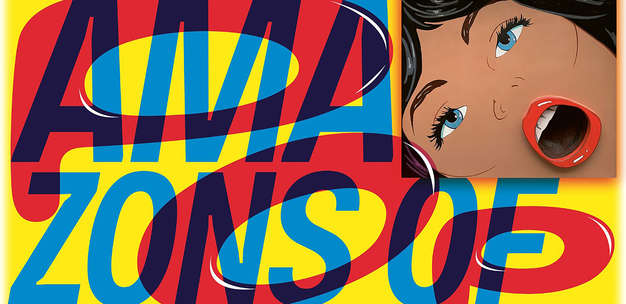
Amazons of Pop! Women artists, superheroines, icons 1961-1973

18 lunedì Apr 2022

Posted by Lucia Marcucci in Eventi

≈ Lascia un commento

Tag

Arte Contemporanea, Contemporary Art, Lucia Marcucci, MAMAC, Poesia Visiva, Pop Art, Visual Poetry

Amazons of Pop!
Women artists, superheroines, icons 1961-1973

About the exhibition

‘Art? Isn’t that a man’s name?’  
Andy Warhol

Bright colours, plastic and PVC, reduced forms, trivial and equally fetishized motifs from consumerism and advertising, mass media and comics, sexually permissive displays of femininity – this is Pop Art as we know it. But it can also be quite different: angry, daring, rebellious, openly erotic, subversively ironic as well as confrontational, inviting and activist. From the very beginning, self-confident and expressive female Pop artists shaped this art movement, which was for a long time dominated by men. The exhibition Amazons of Pop! challenges the traditional art historical canon of what is generally regarded as Pop Art. As feminist pioneers, female Pop artists with a lot of ‘Vroom, Bang, Ka-Pow! and Wham!’ questioned the traditional role of woman and muse. They worked autobiographically, often across genres as well as in different media, combining the bold aesthetics of a brave new world of commodities with the self-confident adoption of the new synthetic materials and technologies, while blending them with performance and also textile or paper crafts – for a long time ranked by art history as ‘low’ to even no art. From the early 1960s on, women artists unabashedly appropriated the broad repertoire of a metropolitan, consumer-oriented and media-reproduced awakening in order to challenge it in different ways and to take up their own unique positions within it: demonstratively approving like Sturtevant, openly provocative in their display of nudity and sexuality like Dorothy Iannone and Evelyne Axell, through demonstrative self-dramatization like VALIE EXPORT, or furious and explosive like Niki de Saint Phalle.

The exhibition, initiated by MAMAC Nice and previously shown at the Kunsthalle zu Kiel, anchors Pop Art in Europe, explores links with the North American movement, especially in New York, and also examines Austrian Pop Art tendencies at Kunsthaus Graz. At a time when the US economy was prospering, its big cities glittering with lights, Vienna remained a dark and dirty place, struggling with the consequences of the Second World War. Until 1973 the euphoric Pop Art movement manifested itself in Austrian art in a rudimentary, marginal way, at times subliminally – in the weightless and flattened body silhouettes of Kiki Kogelnik, for instance, and the erotic, dreamlike yet equally brutal woodcuts of Auguste Kronheim, the fragmented and re-arranged advertising images and abstract compositions of Ingeborg G. Pluhar or the parasitic projects of Angela Hareiter, whose experimental architectural approaches are located at the interface with art.

Amazons of Pop! shows in a comprehensive way just how complex and heterogeneous women artists’ contribution to the history of Pop Art is, also integrating conceptual, activist and performative approaches. At Kunsthaus Graz, the exhibition design exploits an intrinsic affinity with the origins of blob architecture and, with around 120 works by some 40 female artists, superheroes and icons from various media such as painting, installation, performance, sculpture and film, encourages visitors to immerse themselves in the female world of Pop and a period of social, technological and political upheaval. It supports the successive recognition and public awareness of female Pop artists as well as a reappraisal and reassessment of conventional art history – as initiated by exhibitions such as POWER UP – Female Pop Art​ at the Kunsthalle Wien in 2010 – and takes them a step further. 

With works by Evelyne Axell, Barbarella, Brigitte Bardot, Marion Baruch, Pauline Boty, Martine Canneel, Lourdes Castro, Judy Chicago, Chryssa, France Cristini, Christa Dichgans, VALIE EXPORT, Jane Fonda, Ruth Francken, Ángela García, Angela Hareiter, Jann Haworth, Dorothy Iannone, Jodelle & Pravda La Survireuse, Corita Kent, Kiki Kogelnik, Auguste Kronheim, Kay Kurt, Nicola L., Ketty La Rocca, Natalia LL, Milvia Maglione, Lucia Marcucci, Marie Menken, Marilyn Monroe, Isabel Oliver, Yoko Ono, Ulrike Ottinger, Emma Peel, Ingeborg G. Pluhar, Martha Rosler, Niki de Saint Phalle, Carolee Schneemann, Marjorie Strider, Sturtevant, Valentina Tereshkova, May Wilson.

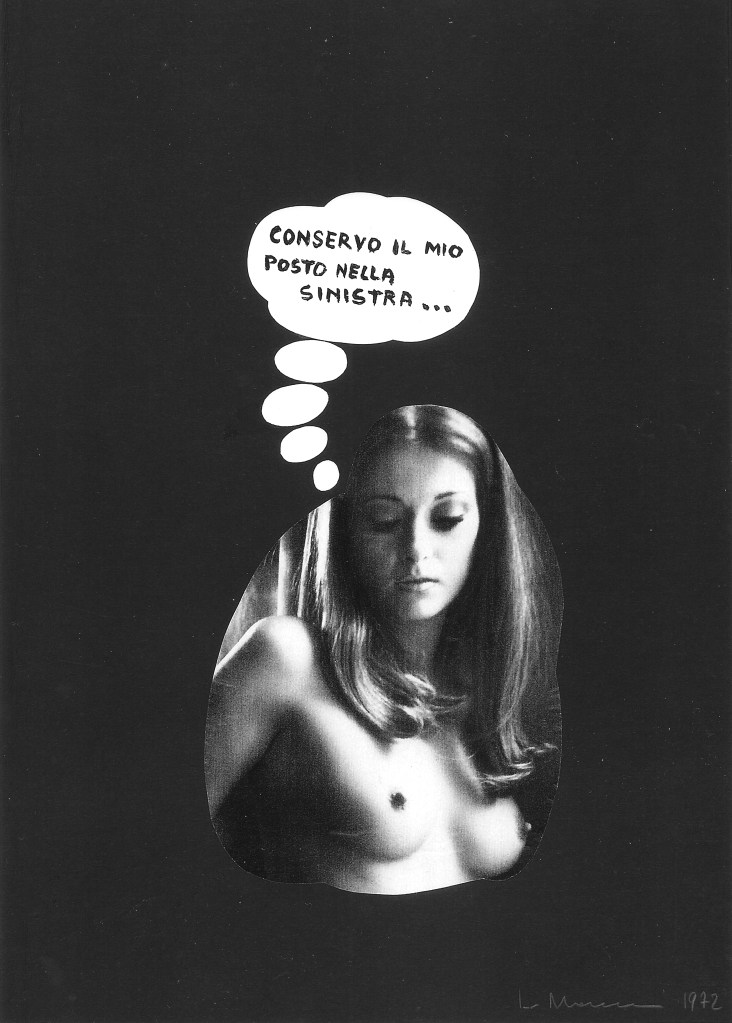
Lucia Marcucci – Conservo il mio posto… (1972) © Riproduzione riservata

An exhibition by MAMAC Nice in collaboration with Kunsthalle zu Kiel and Kunsthaus Graz and the support of Manifesto Expo.

Curated by: Hélène Guenin, Géraldine Gourbe, Katrin Bucher Trantow, Barbara Steiner

Venue: Space02

Opening: 21.04.2022, 7 pm

Kunsthaus Graz: 24 April to 28 August 2022

Amazons of Pop! Women artists, superheroines, icons 1961-1973

01 venerdì Ott 2021

Posted by Lucia Marcucci in Eventi

≈ Lascia un commento

Tag

Lucia Marcucci, MAMAC

Amazons of Pop!
Women artists, superheroines, icons 1961-1973

From 2 October 2021 to 6 March 2022, the Kunsthalle zu Kiel will be showing the female side of pop art on an extensive scale with around 40 artists from Europe and the USA. About 100 works from the fields of painting, installation, performance art, sculpture and film will be exhibited.

In art history, female pop artists have long been overlooked, neglected or forgotten. Names such as Dorothy Iannone, Kiki Kogelnik and Evelyne Axell did not initially reach a wider audience, although, like many other artists of their kind, they not only enriched the pop art movement but also played a decisive role in shaping it. Soft, flexible materials such as plastics, fresh, vivid colours and everyday consumer culture, all inspired a brand of pop art that is colourful, humorous, political, challenging and transgresses boundaries. Amazons of Pop! invites visitors to delve into the world of pop and a period of awakening: the 1960s and the beginning of the 1970s.
The exhibition was conceived by Hélène Guenin, director of MAMAC Nice, and the independent author and curator Géraldine Gourbe. It is being shown in an adapted version at Kunsthalle zu Kiel, from where it will travel to the Kunsthaus Graz.

Amazons of Pop! Artists, superheroes, icons 1961‒1973 not only broadens the examination of pop culture and the world of commodities, politics and society to include feminist aspects but also integrates film, music and comic figures. The exhibition is divided into three broad sections and encompasses an era of social optimism and political tensions in the period from 1961 to 1973. This era saw protests against racial segregation, the conquest of space and the moon landing, a growing women’s movement, the sexual revolution, the Cold War and independence movements in many countries. Female artists took up the themes of these areas of conflict in their work, visible influences that were often characterised by future oriented utopias and unmistakable political attitudes. Many of the artists saw themselves as part of a broader liberation movement. The social, cultural and technological developments during the post-war period are the focus of the works on display. These artists also created female imagery that offered an alternative to dominant stereotypes of women in the mass media – and therefore to those in the work of male pop artists too. In 1973, events like the first oil crisis triggered a watershed moment that severely shook the vision of a progressive, peaceful future based on equality which many believed to be almost in reach.

Individual biographies integrated into the exhibition and a sociopolitical chronology of historical events provide additional information. An extensive publication in German and English accompanies the exhibition.

Artists and other protagonists:
Evelyne Axell, Barbarella, Brigitte Bardot, Marion Baruch, Pauline Boty, Martine Canneel, Lourdes Castro, Judy Chicago, Chryssa, France Cristini, Christa Dichgans, Jane Fonda, Ruth Francken, Ángela García, Jann Haworth, Dorothy Iannone, Jodelle, Corita Kent, Kiki Kogelnik, Kay Kurt, Nicola L., Ketty La Rocca, Milvia Maglione, Lucia Marcucci, Marie Menken, Marilyn Monroe, Isabel Oliver, Yoko Ono, Ulrike Ottinger, Emma Peel, Pravda La Survireuse, Martha Rosler, Niki de Saint Phalle, Carolee Schneemann, Marjorie Strider, Sturtevant, Valentina Terechkova, May Wilson

Lucia Marcucci – Conservo il mio posto… (1972) © Riproduzione riservata

Organized by the MAMAC Nice in collaboration with Kunsthalle zu Kiel and Kunsthaus Graz, with the support of Manifesto Expo.

Curators:
Hélène Guenin, Géraldine Gourbe (MAMAC) in collaboration with Regina Göckede, Anette Hüsch (Kunsthalle zu Kiel), Katrin Bucher Trantow, Barbara Steiner (Kunsthaus Graz)

Kunsthalle zu Kiel: 2 October 2021 to 6 March 2022
Kunsthaus Graz: 22 April to 28 August 2022

The exhibition was first shown at the MAMAC Nice under the title She-Bam Pow Pop Wizz! Les Amazones du Pop.

SHE-BAM POW POP WIZZ! THE AMAZONS OF POP. FOCUS ON LUCIA MARCUCCI

13 venerdì Ago 2021

Posted by Lucia Marcucci in Eventi

≈ Lascia un commento

Tag

Arte Contemporanea, Contemporary Art, Lucia Marcucci, MAMAC, Poesia Visiva, Pop Art, Raffaella Perna, Visual Poetry

Interview of Raffaella Perna (curator and art historian) on Lucia Marcucci work. August 11, 2021.

• What does Pop Art mean to Lucia Marcucci? Has she ever considered herself a pop artist? If so, why? Has she ever felt like a member of a group or community involved in Pop Art? Why or why not?

Among the artists involved in the experience of Group 70 – an Italian visual poetry movement formed in 1963 in Florence – Pop Art was considered to be a trend insufficiently critical of consumer culture and capitalist system.
The works of Andy Warhol or Roy Lichtenstein were seen more as an acknowledgement of the new visual imagery and consumer culture rather than a critique.
The visual references that Pop artists and artists of the Group 70 look to were similar, belonging to the universe of mass culture produced by the economic boom. Lucy Lippard in her now historical book on Pop Art (1966) immediately noticed this affinity.
But the use of images from advertising, comics and magazines in Marcucci’s and her fellow artists’ works had a more explicit political purpose. In fact, Italian artists spoke of “semiological guerrilla warfare”, using a keyword coinvented by the group.
For this reason, Lucia Marcucci’s work, although formally close to Pop Art experiences, presents more ironic, combative tones and highlights an antagonistic spirit, which is more critical and political. The artist never felt an integral part of Pop Art, which she actually regarded with a certain suspicion.

• What were the sources of her imagery or her pictorial subjects?

The main sources of Lucia Marcucci’s art belong to the mass culture visual sphere: images and slogans of magazines, newspapers, photostories, advertising and cinema. Among other things, she has made a number of artist’s films, including Volerà nel 70 – now very well-known in Italian experimental cinema – using the practice of found footage, which could be considered the filmic equivalent of her images collage. From the 1970s onwards, the use of the body became more evident: for example, in the Impronte series made in the 1970s, Marcucci recalls images of prehistoric Venuses, thus reconnecting with the iconography of the Great Mother.

• Has she ever dealt in your work with major issues and events relating to the period 1961-1973? If so, which ones?

Yes, in her collages Marcucci tackled issues that were central to the politics of the time: there are constant references to imperialism, the Vietnam War, anti-militarism or social issues such as abortion and divorce. Women’s condition is of crucial importance: the artist contested beauty stereotypes to which women’s bodies were forced. In her photographic work “La ragazza squillo”, the artist plays ironically on the double meaning of the word ragazza squillo, which in Italy means prostitute. In “Come ama come lavora” the artist already felt the weight of the stereotype stating that a woman had to be efficient in the public and productive sphere and at the same time devoted to domestic care duties.

• Did the role given to women in the society of that time have an impact on her artistic production and your being an artist?

Yes, Marcucci always spoke explicitly about the difficulty for a woman to make her way in the Italian art world of the 1960s.

• Has she ever received support from galleries, critics, or collectors?

Lucia Marcucci’s work was appreciated from an art critical point of view – I am thinking, for example, of the early support of critics such as Renato Barilli and Gillo Dorfles – but the system of galleries and collectors were not very open to the radical and politically committed experimentation of visual poetry.

• Did she make a living by selling her art or did she do other work (teaching, commissions or other) to supplement her salary?

Lucia Marcucci worked as a teacher.

• As a woman artist, did she ever feel limited in any way at that time as regards the possibilities of being noticed or exhibiting your work?

Marcucci, as I said, has often recalled the difficulty for a woman to establish herself in the art system, but at the same time, she has always felt equal to her male colleagues and has always been reluctant to participate in women-only exhibitions. She only did so in certain circumstances, I am thinking, for example, of some exhibitions curated by Romana Loda or the exhibition Materializzazione del linguaggio curated by Mirella Bentivoglio – another Italian artist linked to visual poetry – as part of the 1978 Venice Biennale. But Marcucci was suspicious of these exhibitions because she considered them to be a sort of ghetto. In her opinion, these kinds of exhibitions did not undermine the subordination of women, but rather, in a way, reaffirmed it. For Marcucci, women had to play on an equal footing with men, even though she was well aware of the enormous difficulties women faced in their daily lives and at work.

• What does she think of that situation today and how does she perceive the renewed interest of the public and critics in your work from that period?

Lucia Marcucci looks forward to this phase of well-deserved critical recognition. She is an artist who has struggled all her life, always maintaining great consistency in her work, and it is an important sign that she is now recognised by national and international critics and historiography. I believe that a crucial role in this process has been played by both the growing interest in female artists, not only in the Anglo-Saxon area, and the recent critical reinterpretation that extends the boundaries of Pop Art to different, non-hegemonic, and more politically committed experiences, such as Visual Poetry.

Focus on Isabel Oliver

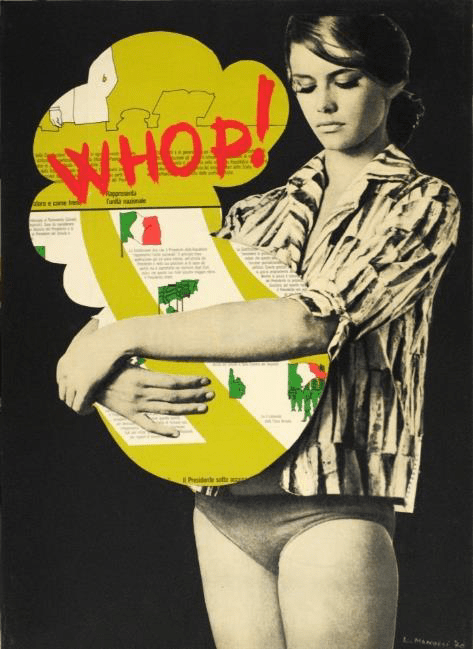
Lucia Marcucci – Whop! (1970) © Riproduzione riservata

Intervista a Raffaella Perna (curatrice e storica dell’arte) sul lavoro di Lucia Marcucci. 11 agosto 2021.

  • Cosa significa per Lei l’arte Pop? Si è mai considerata un’artista pop? Se sì, perché? Si è mai sentita membro di un gruppo o di una comunità coinvolta nella Pop Art? Perché o perché no?

Dagli artisti e le artiste coinvolti nell’esperienza del Gruppo 70 – movimento italiano di poesia visiva formatosi nel 1963 a Firenze – l’Arte Pop era considerata una tendenza non sufficientemente critica nei confronti della cultura del consumo e del sistema capitalista. Le opere di Andy Warhol o Roy Lichtenstein venivano viste più come una presa d’atto del nuovo immaginario visivo e della nuova cultura consumista, che non come una critica. I riferimenti visivi a cui guardano gli artisti Pop e gli artisti del Gruppo 70 sono simili, appartengono all’universo della cultura di massa prodotta dal boom economico. Lucy Lippard nell’ormai storico libro sulla Pop Art (1966) si accorge subito di questa affinità. Ma il recupero di immagini tratte dalla pubblicità, dal fumetto, dai rotocalchi nelle opere di Marcucci e dei suoi compagni di strada ha finalità più esplicite sul piano politico. Gli artisti italiani parlavano infatti di «guerriglia semiologica», usando le parole chiave coniate dal gruppo. Per tale ragione il lavoro di Lucia Marcucci, benché formalmente vicino alle esperienze Pop, presenta toni più ironici, battaglieri ed evidenzia uno spirito antagonista, più connotato sul piano critico e politico. L’artista non si sentiva dunque parte integrante dell’arte Pop, a cui, anzi, guardava con un certo sospetto.

  • Quali furono le fonti del suo immaginario o dei suoi soggetti pittorici?

Le fonti principali dell’arte di Lucia Marcucci appartengono all’ambito visivo della cultura di massa: le immagini e gli slogan dei rotocalchi, dei quotidiani, dei fotoromanzi, della pubblicità, del cinema. L’artista tra l’altro realizza alcuni film d’artista, tra cui Volerà nel 70 – oggi molto noti nel cinema sperimentale italiano – usando la pratica del found footage, che si può considerare l’equivalente filmico del montaggio di immagini presente nei suoi collage. Dagli anni Settanta si fa più evidente l’uso del corpo: ad esempio nella serie delle Impronte realizzate negli anni Settanta Marcucci richiama le immagini delle Veneri preistoriche, ricollegandosi così all’iconografia della Grande Madre.

  • Ha mai trattato nel suo lavoro le maggiori problematiche ed eventi relativi al periodo 1961-1973? Se sì, quali?

Sì, Marcucci nei suoi collage ha affrontato temi al centro della politica dell’epoca: nei suoi collage ci sono riferimenti continui agli imperialismi, alla guerra in Vietnam, all’antimilitarismo o a tematiche sociali quali l’aborto e il divorzio. La condizione della donna ha un peso cruciale: l’artista contestava gli stereotipi di bellezza e perfezione a cui il corpo delle donne era costretto. Nell’opera fotografica «La ragazza squillo», l’artista gioca, con ironia, sul doppio senso della parola ragazza squillo, che in Italia significa prostituta. In «Come ama come lavora» l’artista avvertiva già il peso dello stereotipo secondo cui una donna doveva essere efficiente nella sfera pubblica e produttiva e nel contempo dedita alle mansioni di cura domestica.

  • Il ruolo conferito alle donne nella società di quel tempo ha avuto un impatto sulla sua produzione artistica e nel suo essere artista?

Sì, Marcucci ha sempre parlato esplicitamente della difficoltà per una donna di farsi strada nel mondo dell’arte italiano degli anni Sessanta.

  • Ha mai ricevuto supporto da gallerie, critici o collezionisti?

Il lavoro di Lucia Marcucci è stato apprezzato dal punto di vista della critica d’arte, penso ad esempio al precoce sostegno di critici come Renato Barilli e Gillo Dorfles, ma il sistema delle gallerie e del collezionismo erano poco aperti alle sperimentazioni radicali e politicamente impegnate della poesia visiva.

  • Riusciva a vivere tramite la vendita della sua arte oppure svolgeva nel frattempo altro lavoro (insegnamento, commissioni o altro) per arrotondare lo stipendio?

Lucia Marcucci svolgeva il lavoro di insegnante.

  • Quale donna artista, si è mai sentita in quel periodo in qualche modo limitata per quanto riguarda le possibilità di essere notata o di esporre le sue opere?

Marcucci, come dicevo, ha più volte ricordato la difficoltà per una donna di affermarsi nel sistema dell’arte, ma nel contempo si è sempre sentita alla pari rispetto ai suoi colleghi uomini ed è sempre stata restia a partecipare alle mostre di sole donne. Lo ha fatto solo in determinate circostanze, penso ad esempio ad alcune mostre curate da Romana Loda o alla mostra Materializzazione del linguaggio curata da Mirella Bentivoglio – altra artista italiana legata alla poesia visiva – nell’ambito della Biennale di Venezia del 1978. Ma Marcucci era diffidente nei confronti di queste rassegne, perché le riteneva una sorta di ghetto. Secondo lei questo genere di mostre non scalfiva la condizione di subalternità della donna, anzi, in un certo senso, la riaffermava. Per Marcucci le donne dovevano giocare alla pari con gli uomini, nonostante fosse ben consapevole delle enormi difficoltà incontrate dalle donne nella vita quotidiana e nel lavoro.

  • Cosa ne pensa oggigiorno di quella situazione e come percepisce il rinnovato interesse di pubblico e critica per il suo lavoro di quel periodo?

Lucia Marcucci guarda di buon occhio a questa fase di meritato riconoscimento critico. E’ un’artista che ha lottato tutta la vita, mantenendo sempre una grande coerenza nel suo lavoro, ed è un segno importante che oggi venga riconosciuta dalla critica e dalla storiografia nazionale e internazionale. Credo che in questo processo abbiano giocato un ruolo cruciale sia il crescente interesse nei confronti delle artiste donne di area non solo anglosassone, sia la recente rilettura critica che allarga i confini della Pop anche ad esperienze diverse, non egemoni e più politicamente impegnate, come, appunto, la Poesia visiva.

Focus di Isabel Oliver

© Riproduzione riservata

She-Bam Pow POP Wizz! The Amazons of POP

30 mercoledì Set 2020

Posted by Lucia Marcucci in Eventi

≈ Lascia un commento

Tag

Arte Contemporanea, Contemporary Art, Lucia Marcucci, MAMAC, Poesia Visiva, Visual Poetry

In the early 1960’s, paper heroines emerge from the comics plates to explore a forbidden world. Their names are Barbarella, Jodelle, Pravda la survireuse (Pravda the motorized survivor)… They are free, powerful and sensual such as the Amazons. Born out of a teenage culture, they emboy a new ideal that will be the starting point for an unprecedented social and sexual revolution.

Besides these paper representations, other heroines, very real ones, take a part in the invention of a new artistic language – undoubtedly the most popular one of the second half of the 20th century: the Pop Art. Their works, like comic books, are full of vibrant rainbow colours. Through various ways, they envision a different world, with dreamed forms and bet on the construction of a better world rather than on an artificial amnesia of the dark hours of the past. Until 1973, the progressive future seem reachable (sexual emancipation, social rights, pacifism, extraterrestrial imaginations, etc.), and their works proclaim it: Love is All We Need! However, the artists are fully aware of the obstacles that litter this time capsule from 1961 to 1973, particularly with the imperialist wars, geopolitical polarities, the frantic race for consumption, etc. In this sense, the Amazons of Pop become complex, creaky … and tinged with raging humour.

For the first time on this scale, She-Bam Pow POP Wizz! tells us the open story of a generation of European and North American women who contributed with bold and flamboyance, to a less famous side of international Pop Art. For MAMAC 30th anniversary, this exhibition highlights a major axis of its collection – the face to face between New Realism and Pop Art – and one of its charismatic figures: the Franco-American artist Niki de Saint Phalle. In her wake, it is the essential contribution of female artists to Pop Art history that is shown here.

Artists and Amazons: Evelyne AXELL, BARBARELLA, Brigitte BARDOT, Marion BARUCH, Pauline BOTY, Martine CANNEEL, Lourdes CASTRO, Judy CHICAGO, CHRYSSA, France CRISTINI, Christa DICHGANS, Rosalyn DREXLER, Giosetta FIORONI, Jane FONDA, Ruth FRANCKEN, Ángela GARCÍA, Jann HAWORTH, Dorothy IANNONE, JODELLE, Jacqueline DE JONG, Sister Corita KENT, Kiki KOGELNIK, Kay KURT, Nicola L., Ketty LA ROCCA, Natalia LL., Milvia MAGLIONE, Lucia MARCUCCI, Marie MENKEN, Marilyn MONROE, Louise NEVELSON, Isabel OLIVER CUEVAS, Yoko ONO, Ulrike OTTINGER, Emma PEEL, PRAVDA la survireuse, Martha ROSLER, Niki de SAINT PHALLE, Carolee SCHNEEMANN, Marjorie STRIDER, STURTEVANT, Hannah WILKE, May WILSON.

Lucia Marcucci – Whop! (1970) © Riproduzione riservata

This exhibition has been recognized of national interest by the Ministry of Culture. As such, it receives exceptional financial support from the State.

During the month of October 2020 on awarewomenartists.com you will find focuses 3 times a week on the artists of the exhibition She-Bam Pow POP Wizz! Les Amazones du Pop, thanks to the partnership with AWARE (Archives of Women Artists, Research and Exhibitions).

Exhibition curator:

Hélène Guenin, director of MAMAC & Géraldine Gourbe, philosopher, art critic and curator

MAMAC – Nice (France) 03 October 2020 – 29 Août 2021

Ricerca

Lucia Marcucci – Poesia Visiva

La mia poetica consiste, attraverso la parola e il segno, nella rielaborazione letteraria e pittorica, ma soprattutto critica, dei mass media (immagini, slogans, linguaggi variamente persuasori e mistificatori del sistema sociale contemporaneo).

My poetics consists, through the word and the sign, in the literary and pictorial, but above all critical, reworking of the mass media (images, slogans, variously persuasive and mystifying languages ​​of the contemporary social system).

Ma poétique consiste, à travers le mot et le signe, dans le remaniement littéraire et pictural, mais surtout critique, des médias de masse (images, slogans, langages diversement persuasifs et mystifiants du système social contemporain).

Meine Poetik besteht mittels Wort und Zeichen aus der literarischen und bildnerischen, vor allem aber kritischen Aufarbeitung der Massenmedien (Bilder, Parolen, unterschiedlich überzeugende und mystifizierende Sprachen des zeitgenössischen Gesellschaftssystems).

  • Instagram

Blog su WordPress.com.

  • Abbonati Abbonato
    • LUCIA MARCUCCI
    • Unisciti ad altri 45 abbonati
    • Hai già un account WordPress.com? Accedi ora.
    • LUCIA MARCUCCI
    • Abbonati Abbonato
    • Registrati
    • Accedi
    • Segnala questo contenuto
    • Visualizza sito nel Reader
    • Gestisci gli abbonamenti
    • Riduci la barra
 

Caricamento commenti...